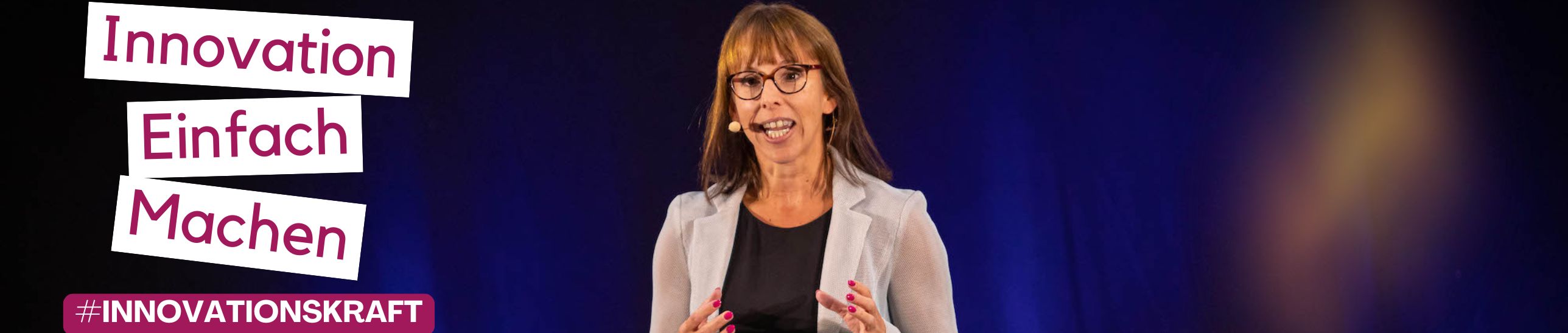
Breaking Innovation Barriers: Interview with Gijs van Wulfen
Innovation einfach machen.
| Bianca Prommer | Rating 0 (0) (0) |
| growth-factory.at | Launched: Nov 15, 2024 |
| prommer@growth-factory.at | Season: 1 Episode: 76 |
"Breaking Innovation Barriers" mit Gijs van Wulfen
In dieser Episode sprechen wir über:
- Was Innovation wirklich bedeutet und warum sie so schwierig ist
- Warum das erste "Nein" der eigentliche Startpunkt für Innovation ist
- Die richtige Timing-Strategie für verschiedene Branchen
- Wie du echtes Management Buy-in gewinnst
- 15 Strategien zum Überwinden von Innovationsbarrieren
- Der Weg von "Innovation" zu "We-nnovation"
👤 Über unseren Gast:
Gijs van Wulfen ist Innovationsexperte und Autor mehrerer Bücher, darunter der Bestseller "The Innovation Expedition". Sein neues Buch "Breaking Innovation Barriers" erscheint am 27. November 2024.
📚 Erwähnte Ressourcen:
- "Breaking Innovation Barriers" - Neues Buch von Gijs van Wulfen
- "The Innovation Expedition" (2017)
- LinkedIn-Newsletter von Gijs van Wulfen
🌐 Connect with him:
Website: https://www.gijsvanwulfen.com
SUBSCRIBE

Episode Chapters
"Breaking Innovation Barriers" mit Gijs van Wulfen
In dieser Episode sprechen wir über:
- Was Innovation wirklich bedeutet und warum sie so schwierig ist
- Warum das erste "Nein" der eigentliche Startpunkt für Innovation ist
- Die richtige Timing-Strategie für verschiedene Branchen
- Wie du echtes Management Buy-in gewinnst
- 15 Strategien zum Überwinden von Innovationsbarrieren
- Der Weg von "Innovation" zu "We-nnovation"
👤 Über unseren Gast:
Gijs van Wulfen ist Innovationsexperte und Autor mehrerer Bücher, darunter der Bestseller "The Innovation Expedition". Sein neues Buch "Breaking Innovation Barriers" erscheint am 27. November 2024.
📚 Erwähnte Ressourcen:
- "Breaking Innovation Barriers" - Neues Buch von Gijs van Wulfen
- "The Innovation Expedition" (2017)
- LinkedIn-Newsletter von Gijs van Wulfen
🌐 Connect with him:
Website: https://www.gijsvanwulfen.com
Bianca Prommer [00:00:00]:
Breaking innovation barriers. This is the title of the new book of my today's guest in this podcast, and this is the reason why we are talking in English today. It's my first English podcast episode, and I'm really exciting, about this. And yeah. So it's all about breaking innovation barriers and 15 strategies to win the management buy in. So let's start the new episode. Innovators often find themselves facing countless barriers when attempting to revolutionize markets and organizations. Our biggest challenge is to get the management buy in to prioritize innovation and once we're on our way to keep their commitment during the whole development of our innovative initiative.
Bianca Prommer [00:00:59]:
In this podcast today, I interview the acclaimed author, Gies van Wulfen, on his new book, breaking innovation barriers, empowering you with 15 practical strategies to overcome the main barriers to innovation. You will learn how to win the buy in of managers and investors, transforming your vision and dreams into tangible reality. So let's have a a great and insightful chat with Hays Van Buren. Welcome. Welcome, Hays. Nice to have you here on my podcast. Great to have you here.
Gijs van Wulfen [00:01:48]:
Thank you. I feel honored to I feel honored to, really.
Bianca Prommer [00:01:53]:
Yeah. So I'm following you since 2017. And in the intro, I've already already shown you my my book. I've the first book of you which I have read, it was the Innovation Expedition. And I bought it in 2017, so 7 years from now. And, yeah, now you are in the podcast. Great to have you.
Gijs van Wulfen [00:02:15]:
What was your takeaway on your book?
Bianca Prommer [00:02:18]:
So the most important thing for me was the map, the expedition map. So going from one point to the next one, so you it's a journey. And I think innovation is a journey and where we go together. And for me, it's the most important
Gijs van Wulfen [00:02:36]:
thing. Yeah. Well, of course, may I may I interrupt you, Bianca, because it's the difference between a journey and an expedition.
Bianca Prommer [00:02:44]:
Yeah. Okay. So what's the difference for you? Well
Gijs van Wulfen [00:02:48]:
and that's the point with innovation. You know, creativity is a journey, but innovation is an expedition. An expedition has a goal. We want to go to the moon. We want to go to Antarctica. And, and that's the difference with a journey. Right? Ah. A journey the journey is a destination.
Gijs van Wulfen [00:03:08]:
But within that with innovation, Bianca, you all you really have this goal, and I'm only set aside when we deliver. So it is depicted as a journey, but it is an expedition because we need to deliver as innovators.
Bianca Prommer [00:03:22]:
Yes.
Gijs van Wulfen [00:03:22]:
Activity is a tool, and it's not the goal. So for us, the journey is not the goal. The journey must be pleasant. It will be unpleasant too as you know. So that's, yeah, that's that's short short already into the innovation definition also.
Bianca Prommer [00:03:40]:
I like this, this, difference, because, yeah, so I I'm just thinking in German, of course. So it's the first podcast in English for me. And I'm just thinking in German, and I'm thinking, okay, is is there a difference in our meaning? And I think it's because of my German translate translation, but I can absolutely understand.
Gijs van Wulfen [00:04:02]:
Is it right? Yes.
Bianca Prommer [00:04:08]:
Yeah. Absolutely. But I think we are not using expedition as many as the horizon. So No. That's the reason, I think. But today, we are not talking about your first book. We are talking about your new book and this new book, I like the title because I think it's, so important to talk about it and I will show it. Your new book is breaking innovation barriers, 15 strategists win management by in for change.
Bianca Prommer [00:04:46]:
And we will talk about this in a few minutes. But first of all, I think it's important to talk about what is innovation because there are so many different interpretations and definitions. So what's your definition on innovation?
Gijs van Wulfen [00:05:06]:
Yes. What's my I had a lot of them, and my definition change all the time. So that's, yeah. But now at this moment, I call the innovation is transforming new ideas into reality with impact because we have to make impact. And it's, so first of all, it's not about getting new ideas. That's what I call creativity. It's not about inventing new technologies. That's what I call invention.
Gijs van Wulfen [00:05:40]:
But it's it is and either you can start with an idea or you can start with technology or with a customer friction or with an innovation strategy, but it's all about transforming those ideas into reality. Otherwise, nothing happens. So you go through the stage gate for the corporate innovators. Right? And it's all, is there something coming out of your pipeline? And then you have to have impact. Now I do it beyond the business context because you can innovate in any situation. So and that's what you see. You know? We had product innovation in the seventies and the eighties. I was in there in industry in the eighties.
Gijs van Wulfen [00:06:23]:
Then came service innovation, then came business model innovation, and then boom, it exploded. Right? We got social innovation, sustainability innovation, organizational innovation, and it's all true. It's all innovation. It's all doing new things or doing things in a new way. That's another broad definition of me. Doing new things or doing things in a new way because it's also process innovation. And with services, the process is the product. So if you do things in a new way, automatically, the deliverable is different.
Gijs van Wulfen [00:07:00]:
So but for me, it's all about creating impact. And, yeah, dot. That's that's the difference now with my with my definitions from 10 or 20 years ago.
Bianca Prommer [00:07:16]:
So I think, especially creativity and develop new ideas isn't the problem within companies because there are a lot of ideas. What I can see is the implementation with impact. So Mhmm. Most of the time, there is a bottleneck within the implementation phase. There is a business case missing. There are, yeah. So I think this is the most important or the most difficult thing for me. So now I'm interested in we all know how we how we can develop new ideas.
Bianca Prommer [00:07:53]:
We all know why it is important to be more innovative. But why is it so difficult?
Gijs van Wulfen [00:07:59]:
Yes. Well, you can invent alone within an organization. You can only innovate together. Mhmm. Because if you go from idea to realization, how many people you need, even in a in a in a in a small or midsize company. You need 5 people, 10 even. Right? To, you know, you need, people from production, from IT. You need, designers, marketeers, salespeople to sell it, and then all the all the you need.
Gijs van Wulfen [00:08:31]:
Right? 1, 2 layers, 3 layers, they all need to say yes. So the problem is that to get buy in, and that's the biggest problem. I did a I did a a poll on LinkedIn last year. 790 people responded. And my question was, why does innovation fail? Why does it stop? And, only 8% said feasibility. Couldn't be this. Mhmm. Mhmm.
Gijs van Wulfen [00:09:11]:
8% and the rest all were kind of the soft factors. Getting management buy in, 52%. Too slow, 50%. No business case. I don't know, from from our 25%. And, so the soft factors are the hard factors in innovation. It are the soft fact nobody talks about. Sure.
Gijs van Wulfen [00:09:34]:
You have your stage gate and your processes and your toolbox and your procedures and your your your innovation board. You have to present to them. Everything is arranged, and then it doesn't work. Why? And then we're all that's where all the no's come in. Right? And, oh, you get 1,000 and 1,000 and 1,000 no's. So it is difficult because you need others. And then all the nodes have to do with, of course, fear of failure, especially in, in Germany, right, or or in Austria.
Bianca Prommer [00:10:15]:
Yeah.
Gijs van Wulfen [00:10:18]:
That's impossible. You know? Mhmm. You are the Japanese of Europe. Right? You're into perfection. If if I can the culture sorry
Bianca Prommer [00:10:27]:
to interrupt you, but we have the culture of finger pointing. So who is who is responsible for the failure? Who is responsible for the for the mistake? Yeah.
Gijs van Wulfen [00:10:37]:
Because you are perfectionists. If I give something to a German or to a Japanese, I get an improved I get 10 improved versions back. All about doing things better, which is great. It's great. Because don't get me wrong. I look a bit creative with my long hair and like an artist, but I'm not. I'm a business economist. And you are able to innovate.
Gijs van Wulfen [00:11:05]:
To be able to innovate, you have to be profitable. And how do you get to be profitable? To do things better. So improvement is for today. Right? Yes. And this is how we earn our money today. I love improvement. But at some moments, you should switch from improvements to innovation, from a step to a jump. Right? And you have to pick there the right moments.
Gijs van Wulfen [00:11:34]:
So I love perfectionists. I am one myself. You know, I'm kind of semi German. It's Dutch it's originally Dutch. I'm very structured. That's why the Ford Innovation Lab is a structure. It's very highly structured. You know? But you have to pick the right moments, you know, to to to jump and go you know? The electric light the electric light was not invented by candlemakers.
Gijs van Wulfen [00:12:09]:
Right? No. Improving candles does doesn't lead to to to electric light. It's just things really different. And that's so difficult, especially in in in Germanistic countries. Right? Come on. You lost the electrical vehicle market. Come on, Germany.
Bianca Prommer [00:12:33]:
Absolutely. Why?
Gijs van Wulfen [00:12:35]:
Because you waited too long. Right? It's doctor Norbert Reitenhofer. You probably know him. Very famous in Germany. He once was the the CEO of BMW and the MINI is and and I remember an interview of him, and I quoted in my keynotes, I read it in a car magazine, in Dutch. Mhmm. I read it in a hairdresser's, and I don't come often at a hairdresser's. So it was pure coincidence.
Gijs van Wulfen [00:13:05]:
And I read about the column and mister Reitenover and this was a long time ago in 2015 or 16. Why does BMW suddenly spend 200,000,000 on electrical vehicles? And Reitenover said, because doing because doing nothing was a bigger risk. Wow. Doing nothing was a bigger risk. Right. And that's when most most people, you know, they they only innovate when they really, really, really have to. But, of course, one was already way ahead, 10 years ahead. Right? And then you lose it.
Gijs van Wulfen [00:13:55]:
You lose it to Tesla and to the Chinese. Yeah. I know. I just read Volkswagen's going to close for the first time 3 factories in Germany. Yes.
Bianca Prommer [00:14:10]:
They are all 30,000, employees. Yeah. Yeah. I read a a newspaper article today in the morning Yes. And they are talking about 30,000
Gijs van Wulfen [00:14:22]:
over the hill and get used to is a lot of car factories in Germany will close because you were too late 10 years ago. Yeah.
Bianca Prommer [00:14:31]:
Absolutely. And I'm I've worked for the automotive industry. So, yes, I know this.
Gijs van Wulfen [00:14:37]:
That's all. And, of course, yeah. So and I'm not finger pointing. Yeah. I'm not finger pointing at all. I understand it completely because you mean you're still in your comfort zone. And you think that with improve with improvement of our existing technology, we will you know, there will be an endless there will be an endless an endless, future for us. But I love operational excellence.
Gijs van Wulfen [00:15:05]:
Mhmm. It can kill me. Yeah. Absolutely. Operational excellence, voom, it makes you focus. Mhmm. And you do things better and better and better and better and better and better and better. And then suddenly, the world change, and you need to observe and learn again.
Gijs van Wulfen [00:15:25]:
Hello, world. What the beep is happening outside? Because working in Volkswagen, that's a beehive, a world in its own. You don't even notice there's an outside world anymore. A big corporation is like a world to you. And and you're only and the internal politics and and it's so big that it completely absorbs you, and only a few people are looking outside. Mhmm. And you just you just get, you know, you just get, you know, blind and believe in your own until boom, you know, you hit a wall and then, oh, we need to change. But Mhmm.
Gijs van Wulfen [00:16:10]:
You can't change because you're not alone. You know? All the German carmakers are like this. Of course. There's only one different. That's why there's only one innovator in the market and 8 or 9 or 10 leggers who need to innovate. Mhmm. There's only 1 who want to innovate and did it 10 years ago started, and now the other 8 or 9 or 10 are trying to we really need to run now because it's going wrong. Right? Mhmm.
Gijs van Wulfen [00:16:36]:
The good news is the good news is for Volkswagen or whatever now, the good news, one, there's urgency. Mhmm.
Bianca Prommer [00:16:44]:
Yeah. Mhmm.
Gijs van Wulfen [00:16:45]:
No. There is no time and no money left. On the other way around, in the beginning, when you are really innovating on a strategic point, I call this the moment on, on on, the moment you want to innovate, You do it before you you hit the curve here at a moment when it goes really well. And the good news is then there's money and time. The bad news is there is no urgency because everybody is busy, busy, busy because the business is growing. So you can only really innovate in a revolutionary way when there is a visionary board or a visionary CEO who says innovation now is important because it takes us 10 years to go from idea to reality. And that's why you have to start now in 2,021,005 to be ready in 2015. And if you start in 2,015, you're ready in 2025, and the other one has a 10 years lead in the market, and you're too late.
Gijs van Wulfen [00:17:51]:
So it requires great vision, because you have to prioritize it as strategic management at the moment because nobody thinks of innovation when you're really, really going busy and, the business is going like this. And now when a business goes like this, everybody says, oh my god. Yes. We need to innovate because I will lose my job too. Yeah. But then the atmosphere is one of fear and not one of opportunity. Now fear gives urgency, but when fear is too big, it can also be, you know, in German, we're gonna get hits. Right? So so, yes, you need to make use of urgency, but you have to not be too late because it then nobody believes that we really can change change our faith again.
Bianca Prommer [00:18:49]:
So let let us sum up this. There were a lot of points now. The question I'm getting a lot of time from customers or from companies is, is there a right moment for innovation? And you've already told something about it. But what would you say? Is there a right moment? And Yes.
Gijs van Wulfen [00:19:14]:
There is a right moment.
Bianca Prommer [00:19:15]:
And how can I I find the right moment?
Gijs van Wulfen [00:19:19]:
I will tell you. That depends on which industry you are. Mhmm. Mhmm. Question is, how long does it take you to get from idea to market? Mhmm. In pharmaceuticals, 15 years. Cars with a new technology, 10 years. In services, one and a half year.
Gijs van Wulfen [00:19:41]:
In cloud computing, 6 weeks. Mhmm. So if it takes you 10 years, it means that the moment you think you need the innovation, 10 years before you should have started. Okay? So the longer it takes, you know, the more so you should when your strategy really works, you know, or your profit is high, you should get worried where I am in in 10 years. So that's the moment you want to innovate. So you repair the roof when it's even not leaking. That's what you do. Mhmm.
Gijs van Wulfen [00:20:23]:
But also but also, you know, like, I helped a a company in Germany, and somebody told me, you know, why do you wanna innovate? It was a family company, big family company, worked all over the world. You have those huge in the in the in Germanistic countries, you have these huge, big family organizations. It's and I asked the the because she's feeling, The fame of I'm failing a division because, you know, I like to give all my children more division and it's pretty simple. And and he said, oh, when but when it's there in 10 years, it's fine. So we really can have revolutionary ideas because, you know, I want to give give really a legacy to to the family and to my children and, you know, I got it for my father and I bring it. So this is also very true and very, you know, good reason to innovate. Because we should not only think from the perspective of big corporates. There are a lot of medium sized organizations which are quite big.
Gijs van Wulfen [00:21:42]:
You know? They really require their professionalism, but there's also this this family family feeling inside. Mhmm. Yeah. The corporate soul and and the family soul. And that's Family. Yeah. And that's even also in getting getting things done. It's also another way of another corporate culture, which also needs to include it has to be inclusive.
Gijs van Wulfen [00:22:13]:
And, you see the different generations in in a family organization fighting each other while they should learn together and go together on an expedition.
Bianca Prommer [00:22:24]:
Mhmm. So it's necessary to think today about the tomorrow in 10 years, 15 years. It depends on the industry. So what I'm experience experiencing is one point, and you've already mentioned it. It's the typically no. No. We do not have time now. No.
Bianca Prommer [00:22:48]:
We do not have the resources now. No. We do not have I don't know. And there's one statement within your new book, and I I really love it. I really enjoy it, and I will show it now. Innovation doesn't stop at the first no. That's the moment it starts. What were your thoughts on this statement within your book?
Gijs van Wulfen [00:23:12]:
Okay. First of all, I'm going to ask you a question. When a client says no to you, what do you feel?
Bianca Prommer [00:23:20]:
1st, I'm so, oh, okay. Why not no? But then, for me, it's always and we've already talked about it. So the chairman know it's 9, and it stands for there is one information
Gijs van Wulfen [00:23:36]:
Oh, no. No. Now you're coming with the solution already. Yeah. And now you can report my question to you also, what do you feel when I say no to you? What do you feel? What do you feel? Come on.
Bianca Prommer [00:23:49]:
Nervous. Nervous. Yeah. I feel, disappointed. Yes.
Gijs van Wulfen [00:23:58]:
You feel disappointed?
Bianca Prommer [00:24:01]:
Yeah. I'm searching the mistake within my thoughts. So I'm thinking about okay. You both have I'm thinking.
Gijs van Wulfen [00:24:08]:
Feeling is one of rejection. Feeling hurt, feeling rejected, feeling disappointed, feeling frustrated, feeling frustrated, feeling failure. So yes. And then you sit back, and then the extrovert start just blah blah blah blah talking, and the introvert doesn't say nothing anymore for and, you know, afterwards, in your car ride back home, you start thinking and processing it because you feel hurt. And, of course, me too. And it was you know? And, when why did I feel hurt? First of all, it was always unexpected. It was always unexpected. So 10 but when you get 10 times, 20 times, no, you just think, come on.
Gijs van Wulfen [00:24:50]:
Okay. There's a pattern here. You start recognizing the pattern. And then it was always, oh, I was always hurt and from emotions. Sponsor will say, yeah. But they they they they they they they. And but I learned that when I point to you, you know, one finger points to you, but 1, 2, 3 fingers points to me. Well, that's interesting.
Gijs van Wulfen [00:25:14]:
So what could I do? But it was my premises. My premises was that I would always blame them as conservative. And I always saw the conservative people, were kind of less, not as intelligent, not as as the innovative people, which is a wrong premises. Because first, when I want a yes from you, you must trust me. And for you to trust me, you must have a relationship with me somehow. But for every relationship with me, you must understand me. Now do we, as innovators, understand the people in the organization? I don't even want to understand them. I say, come on.
Gijs van Wulfen [00:26:09]:
You are doing this and this and this, and we need to change because you this, this, and this. But it's their history. They're in the organization 30, 40 years. They build this company, and you start blaming them about being come on. The organization is there for 40 years because of their achievements. Don't judge them. So the big change for me was after a lot of fail I said, come on. You know? I must connect to them.
Gijs van Wulfen [00:26:38]:
I must understand them. I must not judge them. Right? So when you accept that conservatism is the normal, they are not abnormal. I am abnormal. They are the abnormal. And because I could accept them, I could understand them. I start talking their language. They connected to me.
Gijs van Wulfen [00:27:02]:
I was in a normal discussion with him, not you and you and you, this and you this, in a normal discussion trying to understand them. That's why we got a relationship. That's why they started to trust me, and that's why I could take them on the process. Now that's their the big difference. Mhmm. So and that's why when I was not psychologically hurt again or I felt rejected again because it was the kind of the normal. Now that's where it starts. Mhmm.
Gijs van Wulfen [00:27:31]:
Because you will get a lot of no's because you're the one who is abnormal, and they are the normal ones. So then you accept that it's normal to get a no. Mhmm. And then and then, you know, the Germanistic, come on. And then, you know, you feel the power inside, and then you start turning those noes into yeses. If you go in and expecting I get a no, you are much more relaxed. And when the no is there, you say, ah, yes. You see, there is it.
Gijs van Wulfen [00:28:06]:
It took a bit long with the law. And you start, you know, and you're there with a totally different mindset yourself where you think, oh, I got this great innovation proposition, and it really is an opportunity, and we really must do it. And then boom, you hit the rock unexpectedly, and then it hurts. And you've expected you know, you are, first of all, much more relaxed yourself, Bianca. Mhmm. And you say, okay. And then they say no. And you can say, hey.
Gijs van Wulfen [00:28:37]:
Of course, you say no. I understand that. And they are amazed that you understand that because, normally, they would have a fight or an argument or, no. I understand it because you think this and this and this and this. Oh, yes. Well, and you think that the future is blah blah blah blah. Yes. Yes.
Gijs van Wulfen [00:28:53]:
No. We're doing fine. I said, okay. So I understand that that you think that. You think that that you're going to the future. Well, I don't know either because as in we all don't know, Bianca. We all don't know. Yeah.
Gijs van Wulfen [00:29:05]:
I don't know. Right. Right. And I will say, okay. No problem with me. I just wait until the shit gets a bit bigger. And then you will call me and then because you have to be open. And also in your German type of, you know, you are so you are so you know, the boss decides, and you do what your boss tells you.
Gijs van Wulfen [00:29:27]:
Right? It's like in Japan. In the Germanistic corporate culture, it's so conservative. But and, of course, as a Dutch guy when I did my project in Germany, I was a bit of and I was a bit. For me, all kinds of things and and and but even you, dare to be open with your boss. Dare to give them direct feedback. And, and if you can't take that, switch. I don't switch from job. Switch from company.
Gijs van Wulfen [00:29:59]:
Right? Mhmm. So so don't be frustrated for 10 or 20 years because, you know, in the end, you will you will you won't function anymore. Because, you know, when it's really not appreciated or when you know that they won't say yes for 5 years, and that's quite normal, switch company switch to a company where the urgency is and start having your added value. So Right. So a lot of no's expect there are thousands of no's. Yes. You get them all. You know? But pick the right moment and don't let one know one know.
Gijs van Wulfen [00:30:34]:
You know? Get get over it, and don't let it hurt yourself. And, you know, when you expect them, it's it's it's you can respond in a much better way.
Bianca Prommer [00:30:47]:
Yeah. I see. I absolutely agree with this. So the imagination of it yeah. So the question now I have is so if a company says, okay. We want to become more innovative. We want to to to give our employees the chance to bring their ideas in and to get the yeses. What can a company do to build an innovation culture that this mindset can be established?
Gijs van Wulfen [00:31:18]:
Yes. Well, this is the most difficult thing there is. You're asking again the most difficult thing there is. Right? And no. Because it's so difficult, it's so big. It's so big. You don't even know where to start. What should we do? Yes.
Gijs van Wulfen [00:31:38]:
It's about strategy and about people and about culture. Alright. Yes. Let's change it. But where do I start? And we used to do kind of, and it still is in a lot of companies, this blueprint. Okay. Let's make a blueprint first of the end situation, and then we're going to work through that in steps and in stages and in phases. Kind of the German plan way to do thing.
Gijs van Wulfen [00:32:07]:
Well, this is not how you build a corporate culture. So what I you know, you just start doing things. Mhmm. Start doing things which work. And, a great example in the book, is of SAP. I don't have to introduce SAP in Germany anymore. Right? Woah. Why is it so fast? Yes.
Gijs van Wulfen [00:32:36]:
Come on. More than a 100000 people now and woah. But SAP is also a very bureaucratic hierarchical company Yeah. Come on with one main product. So everything there is, oh, don't touch it. Don't touch it. It works. Don't touch it.
Gijs van Wulfen [00:32:54]:
Right? How do you innovate within SAP? And Claus von Riegen wrote a wonderful story. He was the the head of innovation strategy of SAP. He wrote a wonderful story about how he created a safe zone of experimentation within SAP. And he created, yeah, a safe experimentation zone and, with all kind of exceptions and people within and they didn't call it a starter, or they didn't call it the innovation hub, or no. No. No. Just, you know, people who who had their ideas, they could, you know, they could come to him and he get it approved, and they could, you know they worked around the bureaucracy because the bureaucracy, is a very good thing. Why? Because every big organization is like a body, creates an immune system.
Gijs van Wulfen [00:33:50]:
Yeah. An organization is also an immune system. Anything we constrain due to all the white blood vessels go there and try to attack it because, you know, it probably it's probably bad for you. Right? And that automatically happens with innovation. Right? All the white blood cells go there. No. That's why we are all the the the bureaucracy is there to protect the body. It's like an immune system.
Gijs van Wulfen [00:34:13]:
So he created the safe zone within within SAP and for years, and that came, to wonderful innovation out of that. And you didn't have to to go the normal way. Because when we are to innovate and our I like to try a new supplier to get onboard one new supplier cost at SAP 6 months. Right? Or or, you know, or I wanna get this and then, and then the innovation was gone already. Right? So he created the safe zone, and that's a great start to ex start to create a safe zone and to experiment. So it will start at the top, say, you know, why don't we, you know, let our corporate rules? And then from the safe zone, they were are because because they have their their experimentation funnel, the the the stage gate funnels. Right? And then you start doing things in a bit of a different way instead of it goes from, okay. Because in Germany, innovation is r and d.
Gijs van Wulfen [00:35:14]:
Yeah. So we wait for r and d to come with something new, and then we somehow in the state get funneled, we have to transform an invention into an innovation. But sales is not involved, Marketing is not involved. Design is not involved. IT is not involved. Come on. There are supply chain is not involved. There are 1,000 other ways of innovation, but we only look at this technological part which has to be transformed.
Gijs van Wulfen [00:35:41]:
Right? So having having, you know, innovate across silos. Right? It goes from one silo to the other and then it's, of course, every time it stops. What is this? Why is it good? Why do we want this? Right? Because there is no ownership, and they just throw it to the other one. And then, of course, it falls on the floor and nothing happens. Mhmm. Also so it's not only about, and that's what I also would do. I would not only create a safe experimentation shown for individuals, but also teams try working together, complementary teams in a in a psychologically safe zone. And so that's the second thing.
Gijs van Wulfen [00:36:27]:
And the third thing is when you're working into something with production or whatever and it costs you 5 years. You know? Don't make innovation priority in 1 year because after 1 year, you have nothing. Right? You should prioritize it and say, okay. We're going to prioritize innovation for 3 years or 5 years or don't do it. Because you can't expect a jump in 1 or 2 years when you when you have done nothing the years before with every respect. Right? Only small changes. So prioritize it for a long a long time and, and own it. So, also, the top must own it.
Gijs van Wulfen [00:37:10]:
And when you don't own it, the rest just see it as another gadget, and it's it's, you know, it's not not worth, anything. So it means also that, German or people in Austria and Germany or wherever, you know, you need to get your own hands dirty. You need to be in the project. Not in the steering committee saying yes or yes. No. No. No. You are in the project.
Gijs van Wulfen [00:37:42]:
The vice president is in the brainstorm, brainstorming with the rest. You will be the grandfather and the grandmother. They are my age. The grandfathers of innovation. And every every child knows that, you know, the grandmother the the father and mother are really German. And the grandmother and grandfather, they make them grow and make and this is how it works in the company in the same way. So you should innovate together. That's why I don't call it innovation.
Gijs van Wulfen [00:38:17]:
There is no I in there is I in invention because not you can think of an idea alone. I call it renovation. Yeah. Because I
Bianca Prommer [00:38:29]:
like this word. Yeah.
Gijs van Wulfen [00:38:31]:
Yeah. Because, you know, it's winovate, not innovate. You know? Inovate, you know, don't have any impact at all because you don't even finish.
Bianca Prommer [00:38:40]:
Yeah. Absolutely. So innovation, I like it because as you've already mentioned, it needs all the people within the company, all the people who wants to change something, and even the management or the CEO or CTO or something, some title like this, to be part of this innovation, to be part of the team, to be part of the implementation phase. So is this meant by your management buy in which you are talking about within your book? So there you are talking about management buy in and shifting strategies to achieve it. Is this meant by the management buy in to make your hands dirty and be part of it?
Gijs van Wulfen [00:39:29]:
Yes. Yes. Yes. But there's one other thing I like to tell is that you shouldn't do this the German way to just announce, now we're going to innovate. The year of innovation. Yeah. That won't work. You just start doing small doing small things.
Gijs van Wulfen [00:39:50]:
Hey. We're doing this experiment. Hey. We're doing this, and this will change. Right? And don't don't make these big announcements of the year of innovation or why, why, why. You know? It only raises expectations. Right? Mhmm. And that's a problem also with with innovators is that I also talked to a CEO and they said, oh, guys.
Gijs van Wulfen [00:40:11]:
You know, these innovators, I got 3 problems with them. 1st, it always takes longer than they promise. Secondly, it always costs more than they promise. They always come back for more money. And then in the end, when I compare the business case with what they realize, they always bring back less what they promised. So also, innovators look at ourselves. We overpromise and underdeliver because we think when we make big promises, we get buy in more earlier, which is not the case. We should do it the other way around.
Gijs van Wulfen [00:40:50]:
We should underpromise and overdeliver. That's how you build trust. Right? So it's also for us to be a great innovator, and perhaps we're going to talk about that later too.
Bianca Prommer [00:41:02]:
Mhmm. Yes. Absolutely.
Gijs van Wulfen [00:41:04]:
It's not it are not only the innovator frustrated about the culture. It's also the forced time really frustrated about why don't I get more. Right? So it's a shared frustration.
Bianca Prommer [00:41:17]:
So after seeing the first content of your new book, I could see the 15 main innovation barriers and the 15 strategies for becoming a better innovator to become more management buy in. We have, you you have a great infographic for that. So we can see it now in the video. And for all the podcast listeners, we put it into our blog and the link is in the show note, of course. So yeah. So what are the 15 strategies to win management buy in? Because I think this is so specific and so, it's yeah. I wouldn't say it's a receipt, but it's, yeah, it's a kind of of something where I can put in my thoughts, that I could put in my my my actions. And I think it's like, a road map, for example, for for employees to win management buy in, isn't it?
Gijs van Wulfen [00:42:26]:
Yes. It is. It is. And it's, you know, I wish I could say do this and then it will happen, but it won't. It's too complex. And, also, the order in which you should do it or what you should do, that's up to you. Not up to me. But, you know, it has to some of them are more culture related, the other ones are more strategy related, and the third one are more process related.
Gijs van Wulfen [00:42:47]:
And what I found out was only after I've written this, I said, hey. Come on. You know? Like, culture related is much more when you are where you can create the conditions. And that's all when you are more in a force stand role or in a more leadership team role. You focus more on the on the culture side and on the strategy side also because that's what you can influence. Now as innovators, we focus more on the process side because that's what we can influence. Right? Because the forestand will trust that we find the right process. So, you know, we can much more be in the lead there.
Gijs van Wulfen [00:43:24]:
So so process innovative strategies are much more for us for us to do to take the initiative. And, also, in strategy, we both meet. Right? Because there, we will help each other in getting a clear a clear strategy. Of course, while there are 15, I'm not going to talk about them all 15. Some are obviously obvious. I like to point out, you know, a few of them. Yeah. Well, you know, as I said, we innovate across silos.
Gijs van Wulfen [00:43:57]:
I started with a culture one. You know? And that's, starts at the top too because innovation is much broader than only r and d. It can also be sparked by marketing or sparked by value chain. You can have internal process innovation sparked by operations. So, but also for we innovate, it is important the way you organize it. Most of the time, innovation is led by innovation project managers who are in the lead, and they own innovation. It's theirs. And that's where the problem starts.
Gijs van Wulfen [00:44:44]:
Because if you are Bianca, the the the vice president innovation, I work for you. And you want to stimulate innovation. Duh. Of course, you want to stimulate innovation. You know, that's on your that's on your deliverables and on your on your yearly targets. If you want innovation to work, it has to be from us, and you should not have a vice president in innovation. Oh, no. No.
Gijs van Wulfen [00:45:12]:
You shouldn't. Why don't you gather under the CEO, you know, only a few people, which are innovation facilitators. What are they? They are they facilitate the innovation process. They get people together. They got a strategic challenge or, as a former client of that, of the use, a must win battle. And then you have a facilitator as a project manager, just a facilitator. And they get a team together, and then in the end, they present a solution and either, you know, a business division adopts the solution or or or or a manager adopts the solution for implementation. So in this way, innovation is managed within the organization and not on the separate innovation stream.
Gijs van Wulfen [00:46:03]:
Because the fast way is a slow way, and the slow way is the fast way. Of course. You know, f when you manage it in your innovation silo, oh, everybody is innovating. And then it has to be implemented by the organization and boom, nothing happens. And an organization is like a herd of animals. When we get more innovators in, young people willing, full of energy, and we want to do it completely different, and let's digitalize and transform and whatever modern things we do. They start running fast. Wow.
Gijs van Wulfen [00:46:43]:
Great energy. But who determines the speed of the herd? The slowest animals. Yeah. Often the CFO is among them. Or quality control. You know? The person who worked 30 years with the firm and managing all the processes and procedures Because they might Mhmm.
Bianca Prommer [00:47:12]:
Yeah. I I thought about the in German or Austrian companies.
Gijs van Wulfen [00:47:18]:
Is that the? The oh, the gifts. Yes. Yes. Yeah. Although, you have 1 or 2 very innovative people from the Yes.
Bianca Prommer [00:47:31]:
Absolutely. Yes. Absolutely. They are
Gijs van Wulfen [00:47:34]:
they are like the muppet show, Waldorf and Staedtler saying commenting all the time. But when you get the in your project
Bianca Prommer [00:47:47]:
Yeah.
Gijs van Wulfen [00:47:47]:
Mostly one of them. Right? And, of course, they sit like this. But then, they are on the journey, and they follow the journey. Wow. And they open their minds because in observe and learn, they see, oh, what's happening? What's happening? What's happening? They get new insights. They they talk to customers. They hear customer frictions, and then they start getting their ideas and raise ideas, making concepts. They could go with new concept and test ideas to the customer.
Gijs van Wulfen [00:48:18]:
Woah. They get feedback. Woah. And they see how customers like it and get buy in, and then they help making a business case to present to the forestands. Wow. Then you got them, and then you got their buy in. Yes. This process takes longer.
Gijs van Wulfen [00:48:36]:
But, otherwise, you know, the young boys and girls from the innovation department or from the innovation hub or whatever more things we do, they go they go fast along the existing organization and try to get it in again, and it doesn't work because there's no ownership. And when you do it slowly, bottom up, right, it goes slower, but you end up further and you can make impact in the market because it's accepted by the organization. So that's what I call, yeah, that's what I call, weinnovation. And, so you weinnovate across silos because then you get the buy in. Because in stage gates, you know, you get from 1 from the ideation part to the development part to the test part to the prototype part to the implementation part to the market launch. You know? Now everybody of every phase is involved in the beginning.
Bianca Prommer [00:49:32]:
Yeah.
Gijs van Wulfen [00:49:32]:
Mhmm. And that's why, you know, you create a lot of parents and a lot of grandparents for this idea. And people want it to happen instead of, oh, what's this? Right? And then you have the non event adherence syndrome. So we got the delay is their DNA is in these ideas and these concept and these business cases, and that makes it much stronger. And so that's that's we innovate across the silos. Of course, I talked about experimenting. We'd love to talk more about being a great innovator. I talked about in strategy, CZ Innovation's sweet spots.
Gijs van Wulfen [00:50:08]:
Yes. Align innovation to strategy. This is important. Why? Because you want to you don't want to be an innovator at the end. You wanna be an innovator. So at the moment that it goes really well, that's the motor spot. So we have to align it to strategy. And innovation can do anything.
Gijs van Wulfen [00:50:32]:
It can even do cost reduction. You say, why okay. Volkswagen, how much do you need to, how much do you need to, to save? 1,000,000,000? Wow. That's kind of a lot. Okay. Either we can just close 3 factories and, we fire 30,000 people or we make an innovation journey. What? Yes. How can we save €1,000,000,000 a year keeping long term keeping our long term vision and without hurting the present business most.
Gijs van Wulfen [00:51:19]:
That's a very interesting even innovation journey. This is how you align innovation to cost saving even. So the point is that the only thing you have when it goes well as innovator is that you can say, hey. I can help you for a start to realize your dreams. Make your strategy are your dreams. Well, let's make it concrete. And with innovation, you make new concept, and new concept are stepping stones for the future strategy. So you have to align it with strategy.
Gijs van Wulfen [00:51:51]:
Otherwise, there is it's only nice to have and not need to have. So that's that's the the in the strategy related one of the one of the strategies, which is strategy related.
Bianca Prommer [00:52:05]:
I like the idea of doing an innovation journey by thinking about how can we save $1,000,000,000. And yeah. So I think it's it's a really great challenge and a great journey and a great possibility to rethink the current situation and to have further opportunities. And not just, okay, we are closing 3 factories and firing 30,000 people, but maybe there are some other opportunities as well. Of course.
Gijs van Wulfen [00:52:40]:
You know, this is the McKinsey way or the Bostik Gosselinci Group way. Okay. But it's it's not the it's not, it can be done in a different way. I won't say it's better. I would take on the I would take on the challenge if you would help me. Don't call
Bianca Prommer [00:52:56]:
to us. Why not?
Gijs van Wulfen [00:52:58]:
But Anybody else who sees this, we're up for the challenge. Challenges even with with cost saving strategies. Mhmm. Another one is, for example, sustainability. Everybody talks about sustainability, sustainability, sustainability, sustainability, sustainability, but who's doing really something? So we're not guessing now. We have sustainability comes up with a sustainability strategy. It's like innovation repeated again, and then nothing materializes because it's of theirs and it's not of the whole organization. Mhmm.
Gijs van Wulfen [00:53:34]:
Or you should have sustainability facilitators instead of sustainability managers.
Bianca Prommer [00:53:40]:
Yeah. Yeah.
Gijs van Wulfen [00:53:41]:
Right? So when you want this change, you should facilitate because, otherwise, it is not embraced by the whole organization. It's only you. Of course. Yeah, Bianca. Hey. Sustainability. Good luck. Not obsessed.
Gijs van Wulfen [00:53:54]:
No. I support you. And then I sit like this to see what what you're bringing back. And then I said, no. I don't really like it. So, why don't you go back? And now you say no to everything you come up with. And you end up leaving the company after 3 years.
Bianca Prommer [00:54:10]:
And that's the point where all these words like innovation, sustainability, quality, something like this, get buzzwords.
Gijs van Wulfen [00:54:20]:
Yes. They get buzzwords. Yeah. They get buzzwords. And they and they, you know and buzzwords. And they are empty empty vessel. There's nothing in nothing in it. There's no action.
Gijs van Wulfen [00:54:33]:
No. No.
Bianca Prommer [00:54:35]:
That's right. So the last question I have, and this is the point where you already said you want to talk more about it, is how can I be better tomorrow? So how can I become a better innovator? Because it's one of the points you've already mentioned. It's one of the strategies. Number 6, be a great innovator. So how can I become a great innovator?
Gijs van Wulfen [00:55:02]:
Okay. Well, you know, Deborah, in my in my book innovation breaking innovation barriers, I talk about 10 10 things. Some are pretty obvious. I won't mention them. The first time I, you know, I start with an unexpected one is that just be yourself. Be authentic. Anybody can be an innovator. Anybody.
Gijs van Wulfen [00:55:31]:
Now if you are a pretty nerdy IT guy, stay the pretty nerdy IT guy. You don't have you don't have to start to wear a tie to work or whatever or or being a making extrovert jokes or whatever. Just stay who you are Because, you know, a great innovator is meaning that people follow you. And they go they follow you because they trust you. And they go on an expedition because they think, hey. When you facilitate this expedition, it will be a success. So you must be believe worthy, and you do that only by being authentic. Just so you don't have to change your personality or whatever.
Gijs van Wulfen [00:56:12]:
I've seen great r and d people be be innovators. Also great ICT people being innovator. Of course, designers, the more extrovert salespeople, they even can be great innovators. Right? And but they need other people around them to make it work and to make it happen. So stay yourself. You have to influence hearts and minds. And, of course, it's easier when you get older. You know, it are the soft things that make things work in an organization.
Gijs van Wulfen [00:56:46]:
It are relationships which make things work in an organization. When I was in my twenties, in my thirties, hey. It was me here, doctor Van Goofen. Yeah. You must do this for me, and you must do that for me because I am the product group manager and global. Pretty important. Nobody does anything for me because of my title or my you know? It's all about making friends, doing favors, feeling supported. So you should not influence minds, but also hearts.
Gijs van Wulfen [00:57:20]:
Get a good team together. Be human. Connect. I think that's very important. Of course, this happens more in a psychologically safe organization than if not. If you work in an organization with a lot of office politics, Go away. Get a new job. Go out of there.
Gijs van Wulfen [00:57:46]:
Don't let them spoil your daily life. Right? You can't influence office politics. You accept it or not, but only a few people can accept it, and then go away. Go somewhere else where you're really valued, and there's a more safe more safe environment where they see they see your real benefits instead of that you have. Always be careful if if somebody tries to steal your budget, steal your people, steal your ideas. You know? It's so, influence hearts and minds, that that's an important one. Be That's I say, especially now, in Germany, be courageous. Don't say yes all the time to your bosses.
Gijs van Wulfen [00:58:41]:
Be courageous. Challenge them. Then you just say, and then you say no. Right? Because then you are, you know, this or dare to ask the question, why? Why is this? Why is this? You know? Would you allow me to have a better or different opinion or not? Challenge it more and more and more. And I know there's a lot of other generations, but I'm talking now about the old elephants in Germany. There are a lot of old elephants in Germany. Great great operation excellence companies who need to do different now. Otherwise, you will be in a problem in 5 or 10 years.
Gijs van Wulfen [00:59:23]:
Right? So you have to challenge them now. At the moment, you know, when business goes well, then you have to challenge the business. But when the business goes bad, then the urgency is there. But to get urgency, you must challenge them. You must shock them. So be courageous there. Now the best thing I say is, at those moments where nobody you know, the Netherlands is really the tulip country. And, we place these bulbs in the ground.
Gijs van Wulfen [00:59:59]:
Right? How do you call in German a bulb, a tulip bulb? What's that?
Bianca Prommer [01:00:03]:
The bulb?
Gijs van Wulfen [01:00:05]:
Yeah. How how do you call this in German? What is the German word for it, for tulip bulb? It's. Yeah. But but but the the the the bulb where the tulip comes out, how do you call it? I don't know. You don't know? Okay. Well, you know, you plant these bulbs. There's you know, you plant when do we plant the bulbs in the Netherlands? It's not in the summer. It's too hot.
Gijs van Wulfen [01:00:35]:
Right? You know, it's it's, in the summer, it's too hot. Not in the winter. The ground is frozen. You plant those in autumn or in spring. Mhmm. In summer, everybody's reorganizing. Right here. Oh.
Gijs van Wulfen [01:00:55]:
Oh. Oh. And then here in the fall, oh, of course. Then you plan them for the next spring. And even spring, you plant them for the so you have to pick there your right moments, but you have to be courageous, especially in spring. Right? You say, oh, come on. All the flowers and the green leaves are coming are coming. Why do we need to plant bulbs? Yes.
Gijs van Wulfen [01:01:20]:
Because it will be fall again. And in the fall, there won't be any green leaves, only red and yellow ones, and there won't be any leaves along the trees, and then we want to have a flowering garden. Right. Mhmm. So you have to
Bianca Prommer [01:01:36]:
be for that.
Gijs van Wulfen [01:01:37]:
That's You have to do that because everybody is still enjoying, oh, look. It's spring. How wonderful. You smell the green. Yes. But what about autumn? And we have to plan them now because the build needs time to grow. Like an idea, time to grow from idea to implementation. So be courageous.
Gijs van Wulfen [01:01:58]:
That's the point. And don't, you know, don't accept every assignment you get. And you say, yes. I got this great project. And I was in my twenties thirties and forties. I say, yes. Yes. Give it to me.
Gijs van Wulfen [01:02:11]:
But then, it's your problem. The moment says, yes. It's your problem. So you should wait to say yes. Okay. What is it? You wanna do it? I don't know. Yes? So because you have innovation, it's so difficult. The only thing you have is a challenge, a team, and a process.
Gijs van Wulfen [01:02:37]:
Challenge, you cannot always influence. The team is sometimes even given to you. Now do you want this or not? You can only say no only at the start. Otherwise the problem. Yeah. Right? And then you're struggling for 1 half year, 2 years. Great. Mhmm.
Gijs van Wulfen [01:03:00]:
So you have to as project leader, you have also be courageous in saying no. If you don't believe in a project, say, no. I don't believe in it. What? Mhmm. Even now, why? Well, you want this, this, and this, and that, that, and that. Come on. We can't come up with revolutionary ideas giving us 45% of EBIT within a year. No.
Gijs van Wulfen [01:03:23]:
If that's a challenge, I won't do it. I need at least years to do it because it's revolutionary. We want something completely different in a year. Forget it. Not with me. I don't wanna be stubborn here, but I can't deliver that to you. Go to somebody else, a fool who accept this. So be courageous because, you know, as innovator, you know, once you get the group on this expedition, they all follow you.
Gijs van Wulfen [01:03:51]:
And if you don't believe in the expedition, they will feel it, and it will go nowhere. And a lot of expedition stranded because of the right ships. So pick the right tools or because of the wrong people on board. Right? So if you if you don't have any influence on the people or the methodology, don't do it. Say, hey. That's where I come in. I know all about good news, and I go all about good methods. So be courageous, be persistent, work the heart and the mind, stay yourself.
Gijs van Wulfen [01:04:28]:
Those are a couple of those things which makes you a good, great innovator.
Bianca Prommer [01:04:32]:
Great. And all the other points and all the other strategies are in your new book. And so I've already preordered it, of course, because I'm really curious about the 15 strategies in detail. I follow you on LinkedIn. I follow you, on the LinkedIn newsletter where you, yeah, explain a lot of the strategies as well. So if there is a person now, a listener of the podcast or from the video, how can we get in touch with you?
Gijs van Wulfen [01:05:08]:
What's the best way? Yeah. Just connect to me on LinkedIn. And, connect to me on LinkedIn and say hi. I will accept you, and, we can talk. But, I would say, in Germany, you don't need me. Just reach out to Bianca. She perfectly can lead any innovation expedition you have, and, she's in close contact with me. So go with all your questions, and when you need a great innovation, innovation expedition leader, Go to Bianca, and I will be in the back seat seeing that everything will go well.
Bianca Prommer [01:05:44]:
Thank you so much. So last but not least, I want to show the book again. So when is the public date? The public publicity date?
Gijs van Wulfen [01:05:55]:
I launched it in Pavia in Italy. I live in Milano now. I launched it in Pavia, Italy, 27th November. I think, Amazon Germany delivers it around that period, so you can preorder it now. If you preorder it and you can't wait, just send me a message via LinkedIn. I will send you a free PDF. Now don't tell my publisher. Okay? But I'll send you a free PDF of the book show you can already start when you preorder.
Gijs van Wulfen [01:06:20]:
And, well, I wish a lot of success, And let's break those in no innovation barriers, and let's innovate Austria and Germany, Bianca.
Bianca Prommer [01:06:31]:
Yeah. Thank you so much, Higgs, for being here in my podcast, in my show. It was a pleasure for me. It was an honor for me to talk with you and get all the insights and inspiration. It's oh my god. It's it was so insightful. Thank you very much for being here today in the show.
Gijs van Wulfen [01:06:50]:
My pleasure. My pleasure. Lots of success, everybody.
Bianca Prommer [01:06:53]:
Ciao. Bye bye. Ciao. Bye.