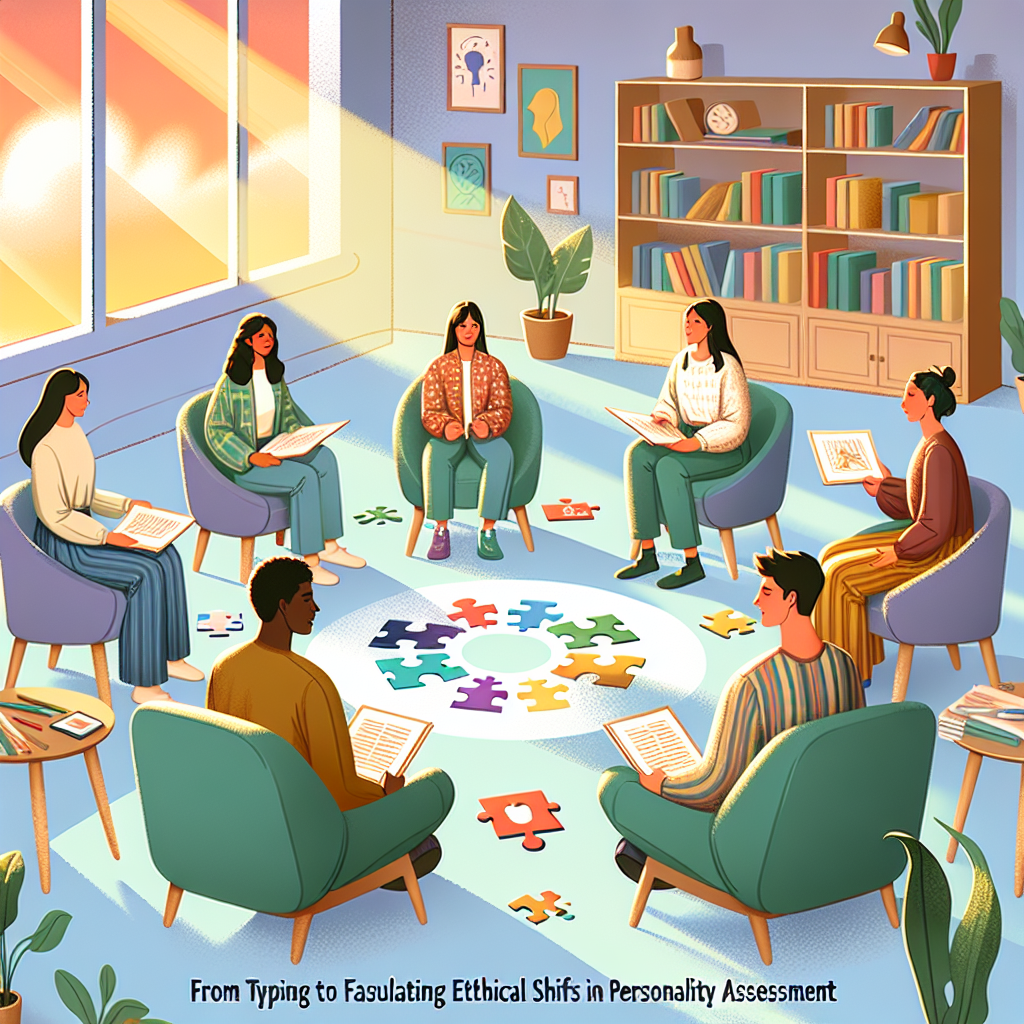
From Typing to Facilitating: Ethical Shifts in Personality Assessment
Beyond Personality Types
| Linda Berens and Olivier Caudron | Rating 0 (0) (0) |
| www.BeyondPersonalityTypes.com | Launched: Sep 04, 2024 |
| podcast@interstrength.org | Season: 1 Episode: 3 |
### Introduction
- Welcome message by Olivier Caudron.
- Introduction of hosts: Olivier Caudron and Linda Berens.
- Overview of the episode's focus on ethical shifts in personality assessment.
### Ethical Concerns with Typing and Profiling
- The limitations and implications of using terms like "typing" or "profiling."
- Concerns about the reliability and ethicality of one-sided assessments.
### The Facilitator's Approach to Self-Discovery
- Linda Berens' perspective on facilitating self-discovery rather than typing or profiling.
- The challenges posed by names like "profiling" and "typing."
- Importance of recognizing cultural variations and expertise limitations.
### The Role of the Facilitator
- Facilitators are not the ultimate experts; clients also hold expertise about themselves.
- Importance of using multiple lenses (e.g., 8 functions, whole type pattern) rather than a single lens.
- Need for facilitators to gather comprehensive information to provide valuable insights.
### Narrative vs. Bullet Points
- Linda Berens' use of narrative descriptions in helping clients.
- Different learning preferences (narrative, bullet points, experiential learning).
- The importance of involving others who know the client well for additional perspectives.
### Ensuring Facilitator Neutrality
- Strategies to avoid unintentional influence during sessions.
- Delving deeper into client's history for accurate insights.
- Acknowledging the inevitability of some degree of influence from the facilitator.
### Addressing Client Expectations and Authority
- The educational background and its influence on the client-practitioner dynamic.
- Providing clients with tools and freedom for self-identification.
### The Johari Window Model
- Explanation of the Johari Window matrix.
- Using the matrix to understand the known and unknown aspects of the client-facilitator relationship.
### Projections and Bias in Facilitating
- Recognizing and managing the facilitator’s own biases and projections.
- Importance of self-awareness and personal work for facilitators.
- Ensuring unbiased presentations and descriptions.
### Ethical Responsibility and Client Relationship
- Emphasizing the ethical "do no harm" approach.
- Maintaining professional ethics similar to that of doctors, psychologists, and coaches.
- Avoiding labeling and providing clients with opportunities for self-exploration.
### Facilitating vs. Typing and Profiling
- Differences between facilitating self-discovery and typing/profiling.
- Providing clients with ongoing homework and resources for continued exploration.
- Encouraging clients to read various type descriptions and reflect.
### Concluding Remarks
- Acknowledgment of the common good intentions of professionals in the field.
- Encouraging better awareness and more accurate client communication.
- Recap of key takeaways: humility, open-ended questions, bias awareness, and multi-model study.
### Call to Action
- Encouraging listeners to visit interstrengths.org for more information.
- Thanking listeners and encouraging reviews and subscriptions.
- Inviting followers to connect on social media.
This sequence outlines the main topics and subtopics discussed in the podcast transcript, highlighting the comprehensive exploration of ethical practices in personality assessment facilitation.
00:00 Guide to ethical, client-centered personality assessment practices.
05:07 Doctor's knowledge varies; consider qualifications and experience.
08:55 Seek advice from people who know you.
12:14 Teacher facilitates; students self-direct their learning.
15:35 Bias awareness enhances self mastery and connection.
16:29 Facilitator guides self-discovery with open-ended questions.
22:15 Ethically guide, support, and respect individual experience.
23:42 Rate, review, subscribe, and follow for updates.
SUBSCRIBE

Episode Chapters
### Introduction
- Welcome message by Olivier Caudron.
- Introduction of hosts: Olivier Caudron and Linda Berens.
- Overview of the episode's focus on ethical shifts in personality assessment.
### Ethical Concerns with Typing and Profiling
- The limitations and implications of using terms like "typing" or "profiling."
- Concerns about the reliability and ethicality of one-sided assessments.
### The Facilitator's Approach to Self-Discovery
- Linda Berens' perspective on facilitating self-discovery rather than typing or profiling.
- The challenges posed by names like "profiling" and "typing."
- Importance of recognizing cultural variations and expertise limitations.
### The Role of the Facilitator
- Facilitators are not the ultimate experts; clients also hold expertise about themselves.
- Importance of using multiple lenses (e.g., 8 functions, whole type pattern) rather than a single lens.
- Need for facilitators to gather comprehensive information to provide valuable insights.
### Narrative vs. Bullet Points
- Linda Berens' use of narrative descriptions in helping clients.
- Different learning preferences (narrative, bullet points, experiential learning).
- The importance of involving others who know the client well for additional perspectives.
### Ensuring Facilitator Neutrality
- Strategies to avoid unintentional influence during sessions.
- Delving deeper into client's history for accurate insights.
- Acknowledging the inevitability of some degree of influence from the facilitator.
### Addressing Client Expectations and Authority
- The educational background and its influence on the client-practitioner dynamic.
- Providing clients with tools and freedom for self-identification.
### The Johari Window Model
- Explanation of the Johari Window matrix.
- Using the matrix to understand the known and unknown aspects of the client-facilitator relationship.
### Projections and Bias in Facilitating
- Recognizing and managing the facilitator’s own biases and projections.
- Importance of self-awareness and personal work for facilitators.
- Ensuring unbiased presentations and descriptions.
### Ethical Responsibility and Client Relationship
- Emphasizing the ethical "do no harm" approach.
- Maintaining professional ethics similar to that of doctors, psychologists, and coaches.
- Avoiding labeling and providing clients with opportunities for self-exploration.
### Facilitating vs. Typing and Profiling
- Differences between facilitating self-discovery and typing/profiling.
- Providing clients with ongoing homework and resources for continued exploration.
- Encouraging clients to read various type descriptions and reflect.
### Concluding Remarks
- Acknowledgment of the common good intentions of professionals in the field.
- Encouraging better awareness and more accurate client communication.
- Recap of key takeaways: humility, open-ended questions, bias awareness, and multi-model study.
### Call to Action
- Encouraging listeners to visit interstrengths.org for more information.
- Thanking listeners and encouraging reviews and subscriptions.
- Inviting followers to connect on social media.
This sequence outlines the main topics and subtopics discussed in the podcast transcript, highlighting the comprehensive exploration of ethical practices in personality assessment facilitation.
00:00 Guide to ethical, client-centered personality assessment practices.
05:07 Doctor's knowledge varies; consider qualifications and experience.
08:55 Seek advice from people who know you.
12:14 Teacher facilitates; students self-direct their learning.
15:35 Bias awareness enhances self mastery and connection.
16:29 Facilitator guides self-discovery with open-ended questions.
22:15 Ethically guide, support, and respect individual experience.
23:42 Rate, review, subscribe, and follow for updates.
Welcome back to Beyond Personality Types, the original InterStrength™ podcast. I’m your host, Olivier Caudron, alongside the brilliant Dr. Linda Berens. In today's episode, "From Typing to Facilitating: Ethical Shifts in Personality Assessment," we explore a critical evolution for those involved in personality type assessments. Have you ever pondered the potential limitations or unintended influences that come with the titles 'typing' or 'profiling'? We're here to help you navigate these concerns and shift towards a more ethical, client-centered approach.
Throughout our discussion, we dive deep into the terminology and practices that could unintentionally limit a client’s self-discovery process. Linda offers profound insights into how to facilitate this journey respectfully and effectively, emphasizing the importance of multiple lenses, narrative descriptions over bullet points, and self-awareness in the professional’s role. Additionally, we'll unpack the crucial responsibility practitioners hold and provide actionable steps to foster an inclusive and open environment for clients.
Get ready to rethink what you know about personality types, as we encourage you to move from mere profiling to truly facilitating self-discovery. Join us as we uncover ways to ensure our practices are respectful, ethical, and ultimately more beneficial for those we aim to help. Stay tuned and let's dive in!
Linda Berens [00:00:00]:
Types are fascinating patterns that are best discovered holistically.
Olivier Caudron [00:00:08]:
Welcome to Beyond Personality Types, the original InterStrength™ podcast. Every week, we provide you with the better ways to use and talk about personality theories. I am your host, Olivier Caudron, a self-discovery facilitator. With me is doctor Linda Berens, internationally renowned for her innovative typology approach. Come with us beyond the indicator results to rethink what you know about personality types. Have you ever considered the limitations and potential overpowering implications behind calling your approach typing or profiling? Hello, and thank you for tuning in to beyond personality types. In today's episode, we delve into how your role's name can unintentionally limit your client's self-discovery and exert undue influence over their insights. We want you to reflect on the responsibility behind that name.
Olivier Caudron [00:01:25]:
But don't worry. We're here to guide you with actionable steps to become more ethical in your approach. By the end, you'll be inspired and motivated to foster a more open client centered practice that respects the complexity of human personality and to make a positive change in your field. Let's see how increasing the awareness about your role's name can help you go beyond personality types. When it comes to assessing personality type preferences, it is often referred to as typing or profiling. While it might sound logical, it can also mislead. Like the Myers Briggs type indicator, this 1 on 1 personality assessment service is valuable yet it might be one-sided and not consider a person in their integrality. Therefore, it may raise some concerns about its reliability and ethicality.
Olivier Caudron [00:02:31]:
Linda, at the Interstrength™ Institute, you teach how to facilitate self discovery. You don't talk about typing or profiling people. What are your concerns regarding those names?
Linda Berens [00:02:42]:
Yeah. One of the challenges with profiling and typing, part of it's in the name and the expectation that it sets. And it sets the expectation that you know really what each of the 16 personality types look like and their variations and that enough about cultural variations to get beyond that, or you know how to ask the cultural question. It sort of implies that you're qualified to do that kind of profiling.
Olivier Caudron [00:03:14]:
If they studied all the different functions or they studied carefully the definitions, I can understand that they feel strong enough to identify a type.
Linda Berens [00:03:28]:
What's really important is to recognize that you're not the expert. And actually the person themselves is really not totally the expert or they wouldn't need some help with identifying. The challenge here with the profiling is that it may be that they're only using one particular lens. So maybe they're using the 8 function lens. That has a couple of problems. One problem is that the 8 functions by themselves are not the same thing as a whole type pattern. So the pattern is the various ways those functions or processes look. Those processes will look different based on where they are in the pattern, how it's configured.
Linda Berens [00:04:12]:
If that's the only lens you're using in terms of what functions you're listening to, you might be able to identify the functions, but you don't know if that person is talking from something that's developed or talking from something that's been there from birth. You may not be able to identify the variations on how each process looks in each position in the pattern. That can be a limiting factor. It's also highly limited by the expertise and your experiences. How many experiences have you had and how open can you be? It is the job of the facilitator to facilitate self discovery in part because the client is an expert in and of themselves. They know some things about themselves. Sometimes their self perceptions may not be accurate. They're still part of the picture.
Linda Berens [00:05:07]:
If you go to a doctor, you expect the doctor to know whether to give you a penicillin or an antifungal. The doctor has lots of experience. And at the same time, that doctor may not know how those things are operating in your body and what else might be going on. So a good doctor, by view, can gather lots of information, which insurance doesn't help much, but limitations. But still, people can have credentials. They've been certified. How deep is that certification? What's required for it would be a question to ask. And how many people of different age groups in different cultures and in different situations has that person worked with? A little aside, I had the good fortune, during the very beginning of the Myers Briggs type indicator popularity, it was really popular.
Linda Berens [00:05:59]:
And there were a lot of programs all over the country. And I was able to provide qualifying programs and see people in this program talk about their type for 15 minutes. So each of the 16 types. Mhmm. And I did 1 to 2 of those a month. I don't know. 14 a year. Mhmm.
Linda Berens [00:06:18]:
Something like that for several years. So I got to see each of the 16 types and get a gut feel for what they were like. That kind of expertise is hard to get, not just to toot my own horn, but I'm still not always right when people come to me. I sometimes get a sense. And then later it turns out that it was something else. Having a process where you invite people to explore different patterns on their own, much like shoe shopping. You see the shoes and you try them on and you walk around in them in the store or you order them and then you walk around them in the house. If they don't fit, you take them back.
Linda Berens [00:06:58]:
If you want type to be relevant and useful, people have to get inside of it and try it on. That's one piece. The other piece is multiple lenses. Surveyors, when they're laying down a road or figuring out what to do with something, always take several measurements to know from different perspectives. The other thing in the profiling, if the person isn't listening for or using some way to get at what we call essential motivators, interaction styles, 8 functions, whole type, even another lens that's developing. But you have at least 3 data points to look at. And if you look at the functions by themselves, that's a problem because you're looking at processes, not at patterns. And if you look at processes related to the other models alone, that's not enough.
Linda Berens [00:07:54]:
So it's really about gathering enough information to have things point to several things. My solution to the problem of being the expert is to give people narrative descriptions. And there is research that says narratives over bullet points convey more than just the bullet points. I've given them some narrative descriptions to read and have them try them on. What I do is I put in my 2¢ worth and say, would you give me a favor and read this page and this page? So that then they're reading self portraits of each of the 16 types, for example.
Olivier Caudron [00:08:33]:
As you said, narrative works better than bullet points, but there are some people more sensitive to bullet points. Also, you have people more sensitive to experience something in order to know themselves better. Thanks to some exercises, discussions also with other people that helps to identify preference.
Linda Berens [00:08:55]:
I usually ask if they're still confused to go to people who know them well, preferably people who like you and ask them, what was I like? And a lot of times, even in the training programs I've done, people would call up their parents and say, what was I like as a kid? Did I do this? Most of my 1 on 1 sessions involve people who are either gonna be in a coaching setting, so I have more time with them and they talk about the situations or in the courses that I teach. And we do have a fair number of people take the certification courses, and they're not interested in certification. They're interested in finding out more about themselves and learning more. The group activities where you get to go into to a group and talk about how you see something that whatever the topic is, and those people are like you. And then you get to hear other groups, and you can change groups if you want. So that kind of group activity helps people clarify. Usually, I get enough from the interview and the questions I ask to make an informed suggestion, and then people can come back and talk about it. Sometimes it'll be a a different lens than we've been looking at that will help them.
Linda Berens [00:10:01]:
Sometimes it's a matter of thinking about what they were young were like when they were younger.
Olivier Caudron [00:10:06]:
When you are in the 1 on 1 session, how could you be sure that you are not influencing the person?
Linda Berens [00:10:12]:
I mean, it can't be. Part of it's my demeanor. It's how I set the frame that I can't tell you who you are. I can't tell you with a 100% accuracy what personality pattern fits you. I I ask a lot of questions getting them to explore what was school like for you. Sometimes they'll go immediately to college and then I have, oh, I think I need to dive a little deeper. Tell me what was it like early on? And sometimes I'll get some clues, but part of it is that I'm asking them about them, but I can't avoid being the expert. I just never tell them.
Linda Berens [00:10:48]:
Oh, I shouldn't ever say that. But I really am pretty sure that I've never said you are a
Olivier Caudron [00:10:55]:
When I had the 1 on 1 session with you, I understood, even though you told me, read also this I think it it was a ESFP description. After the sessions, for me, it was like you told me you are an ESFP. Sometimes the clients leave the session and they hear what they wanna hear, and that's very tricky.
Linda Berens [00:11:18]:
Yeah. And that's inevitable. When I go to my doctor who's a functional medicine physician, she won't do a short visit because she wants to hear what's going on with me and what she trusts, what I tell her. She also takes it with a grain of salt because she has more information than I have. It's the nature of the beast. We do tend to turn into an expert and so somebody with expertise or authority. But in in this case, it should just be expertise. We tend to turn to them and we want to be told the answer.
Linda Berens [00:11:53]:
And then there are some people who don't wanna be told the answer and they're gonna be really resistant to anything I suggest. There is a spectrum there, but the tendency is to, I say, do me a favor and look at, or this might fit you. It's a challenge. How do you language how do you put in the language and get people to not see you as the expert?
Olivier Caudron [00:12:14]:
In the way we are educated, there's always that relation of the teacher knows and the children they don't know. So they have to learn through the teacher. And there are some pedagogies doing the thing around. The teacher is offering the space for the learning. It is the kids who have to come with the material, with some observations to explain what they understood. We all go looking for an authority, someone who will tell us who we are, what we should do, how we should do it, because the responsibility to do it by ourselves is something very threatening. Maybe we think that it will be too much. Again, giving the opportunity to someone to identify by himself or herself, their preferences.
Olivier Caudron [00:13:05]:
It's a freedom. Freedom can be heavy sometimes.
Linda Berens [00:13:09]:
Yeah. I use the Johari window usually in my explanation, which is a matrix of what's known to self, unknown to self, known to others and unknown to others. Kind of identify where we're working with somebody. When they come to us as practitioners, there's stuff we know that they may not know. That means that you're just revealing some things that might be the case for them. Then there are things they know that you don't know. And that's some of what makes them experts about themselves and why it's a dialogue and it's a process that we engage in that is emergent, I would guess. Sometimes some of the things about themselves we don't know and they don't know.
Linda Berens [00:13:48]:
And that's some of what the models give us, like essential motivators. Many of us don't know what we're most motivated by. And if we don't know that, then when we get into a stressful situation, we may not recognize what is the stress trigger. It's really about the importance of recognizing that you're an authority in and of yourself. And I have some expertise and some knowledge that can help you. I'm not gonna decide for you.
Olivier Caudron [00:14:13]:
How to be sure that the professional is not projecting on the person? You are maybe listening and carefully listening, but how could you be sure that you are not projecting?
Linda Berens [00:14:24]:
There are 2 things. The buyer beware. It's recognizing that we do project. We cannot not project. And you people need to have done their own work on themselves and what their biases are. What I ask people in the certification programs to do is to write up their story about their personality, about their these essential motivators. 1 about interaction styles, 1 about their cognitive dynamic story. And in that, I ask questions about bias.
Linda Berens [00:14:51]:
We work to get people to recognize the biases. The big wake up call for me one time was in a workshop, and I was very pretty new to doing workshops. I can still see where this person sat in that u shaped thing. And she said, you don't like SPs, do you? I was using those language. How awful. But anyway and I had to say, you know what? Thank you for that because I had some harm done to me by someone who I think had those preferences. It's always a process of uncovering what our biases are, and those biases come through in tone of voice. They come through whether you describe one pattern negatively and the other patterns positively.
Linda Berens [00:15:35]:
As the practitioner, you can wind up having people not want to own the pattern that you see because you have a bias against it. Those are 2 things we do project and we do have biases. It's the constant self awareness. The other thing is in terms of control, the value of understanding personality patterns is that you become aware of your own perspectives. It increases self awareness. You have to ask yourself, why are we doing this work? And for me, the work is about helping people increase their self awareness and then increase their self mastery or self leadership. So that in a point of conflict, we don't destroy the other person. We wind up forging a better connection and coming to some solutions that will work.
Linda Berens [00:16:27]:
That's the purpose.
Olivier Caudron [00:16:29]:
Someone typing and profiling like self discovery facilitator, they are asking questions. They are looking for clues to fit in their own classification, Actively listening, asking good questions, open ended questions in order to gather as much as possible information. The difference is at the end of a 1 on 1 session with a facilitator in self discovery process is a suggestion in a book. The person has the opportunity to read descriptions. It's not, I give you the solution. A person will leave your office, or I don't know how you call it, but with still a homework to have to read several descriptions, free to keep exploring. The process is the same. The end is different.
Linda Berens [00:17:24]:
And we teach babies, children to name things, dog, cat, and they'll say Goggy, and they're looking at a cat. There's the, they haven't learned the name for cats. So they call the cat a Goggy because there's some similarities. There's that whole continuum of the level of expertise that people have. So the newbies have a tendency to wanna label people partly because it's fun. And and I see this in participants as well. If you're into typology, there's a certain ethics that you need to follow. That ethics includes, does not label.
Linda Berens [00:18:00]:
You model what you want people to be doing. Behind this as a practitioner is the same thing as behind a medical doctor or a psychologist or a coach. Do no harm. So you just do your best to do no harm.
Olivier Caudron [00:18:15]:
I had an great experience with someone I paid to identify my type. He asked me to record at least 20 minutes talking about what I wanted to do when I was young, what's what's stressing me the most. And he answered me in another video. Several times during the video, he said, I can be wrong. I can be wrong. That was very respectful. So that was someone typing me carefully. And yet it was hard for me to not taking him as the authority on my own personality.
Linda Berens [00:18:53]:
The person that you worked with sounds like he or she did a really good job. All of the disclaimers, I don't know whether there's some nonverbal things that happen that make a difference in terms of if somebody will feel like they wanna be told. If they're concealing something, like I'm hiding something, I know what it really is. I often really don't know for sure. I'm seeing both. It's a short amount of time. A one off session probably is not a good idea. By the way, I prefer profiling to typing because a profile can be a complex thing.
Linda Berens [00:19:26]:
To me, typing means I'm typing, not a typewriter.
Olivier Caudron [00:19:29]:
I have the definitions here, actually. Typing is the work or activity of typing something by means of a typewriter or computer keyboard. And for profiling is the practice or method of preparing a set of characteristics belonging to a certain class or group of people or things by which to identify individuals as belonging to such a class or group as to detain for investigation of a possible crime. It's quite close to what we are talking about until as to detain for investigation of a possible crime. So you said, okay. Yeah. You were explaining that for you, typing is using a keyboard.
Linda Berens [00:20:16]:
Well, that was tongue in cheek. I hadn't looked up those definitions. I did look up typology earlier today. A typology is a classification system.
Olivier Caudron [00:20:25]:
Mhmm.
Linda Berens [00:20:26]:
A broad definition of typing is identifying what classification something would fall into. Mhmm. The challenge with both of those, the profiling and the typing, is that there's not a good name for it. It's sort of a a quest for the people who want to who have a capacity to do that, who have the skill to do it, like the person you saw. And then what do you call her? What do you say you do? The closest we've come is facilitating self discovery. That's a three words. It covers a lot of space and takes more time. What is your profession once you get through with the certification? You're an inner strength practitioner, which means you practice helping people have internal and interpersonal strength.
Linda Berens [00:21:10]:
That's our solution, that you're an interStrength™ practitioner.
Olivier Caudron [00:21:13]:
We are very respectful to all the other professionals. I know that all those people typing or profiling are very well thinking. They don't want to do harm.
Linda Berens [00:21:28]:
Yeah. It's well intended.
Olivier Caudron [00:21:29]:
That's the word. Well intended.
Linda Berens [00:21:31]:
Now I do know that some of the people in the field, it's like, what do you call it? Choosing a name of what they're teaching, take profiling, for example. What do we call what we're teaching people to do? And how do we do that? My solution's a little wordier.
Olivier Caudron [00:21:47]:
Yeah.
Linda Berens [00:21:47]:
I would refer to them as practitioners. They might refer to themselves as profilers.
Olivier Caudron [00:21:51]:
Correct.
Linda Berens [00:21:51]:
Or they're do offering profiling. If they're listening, I hope that they become aware that there are other things they need to say to the client. And then if anybody listening becomes a client, they just sort of need to they don't take the name as one up, one down that they're one up to you. You each have something to bring to the party.
Olivier Caudron [00:22:15]:
We've covered a lot of ground today in our discussion on avoiding the pitfalls when we announce what we do and help a person identify their best fit type. If there is one thing I hope you take away from this episode, it's if you say that you typed someone, it means that you were the expert and might not have considered the person. Remember the importance of responsible and ethical practice in our field. Our role is not to label or pigeonhole but to guide and support. You should approach each interaction with humility, ask open ended questions, and be aware of your own biases. By doing so, you create a safe environment that respects the individuality of each person and encourages genuine exploration. As practitioners or type enthusiasts, we must continue to study multiple models, maintain an open mind and always recognize the person as the true expert of their own experience. Visit interstrengths.org for more information about the certification in the self discovery process to becoming an interStrength™ practitioner.
Olivier Caudron [00:23:42]:
Thank you so much for listening to today's episode. If you enjoyed this discussion, we'd really appreciate it if you could leave a rating and review to help others find the show. Remember to subscribe if you don't want to miss next week's episode. You can also follow us on Facebook and Instagram at beyondpersonalitytypes. Thanks again for tuning in. We are Olivier Caudron and Linda Berens. Stay curious and eager to learn until we meet again in our next episode.