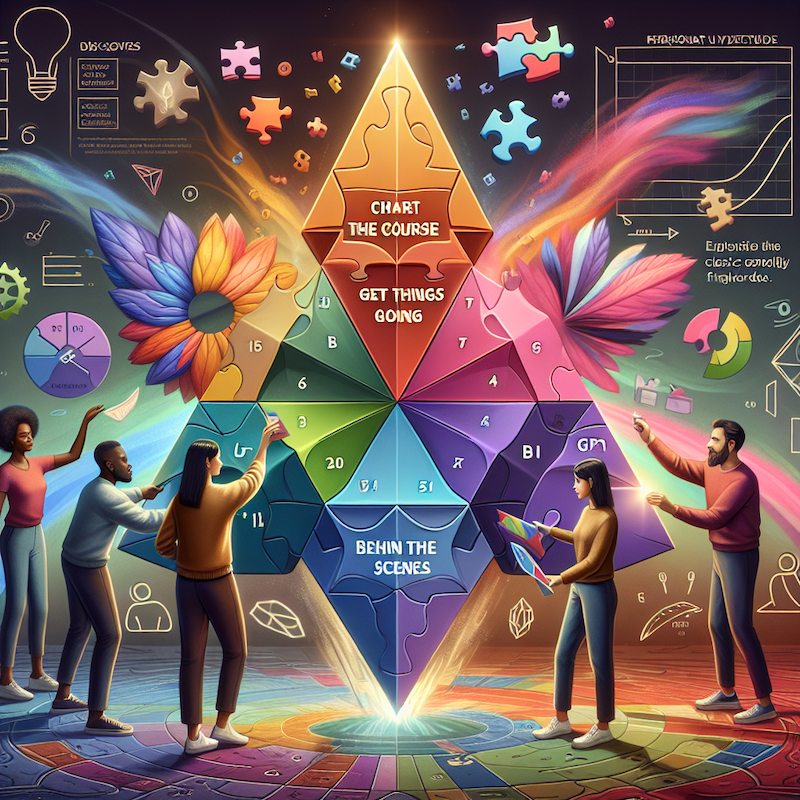

Revealing the Four Interaction Styles: Patterns, Behaviors, and Drives
Beyond Personality Types
| Linda Berens and Olivier Caudron | Rating 0 (0) (0) |
| www.BeyondPersonalityTypes.com | Launched: Jul 14, 2025 |
| podcast@interstrength.org | Season: 1 Episode: 14 |
Transcript
ℹ️ Introduction
Welcome back to Beyond Personality Types, the podcast where we push past personality type labels and dive deep into practical frameworks for understanding human behavior. In this episode, hosts Linda Berens and Olivier Caudron continue their exploration of the Interaction Styles lens—a powerful approach for recognizing the subtle patterns that shape how we engage with the world and each other.
Today, you'll discover four distinct patterns of interaction: In Charge, Get Things Going, Chart the Course, and Behind the Scenes. Linda and Olivier break down what drives each style, from the need to accomplish and move things forward, to a passion for involving others, an instinct to anticipate and prepare, and the desire to integrate perspectives for the best possible outcome. They share real-life examples and team dynamics, making it easy for you to spot these patterns at work, at home, or within yourself.
Whether you’re a seasoned type practitioner or just starting your journey, this episode delivers practical wisdom and fresh insight to help you honor the diversity of interaction styles—so you can foster greater understanding, compassion, and effectiveness in any group. Let's go beyond type results and discover what truly shapes our behaviors and experiences.
📚 Timestamped overview
00:00 Drive and Motivation in Leadership
03:45 Meeting Leadership and Team Dynamics
08:27 "Structured Planning and Focused Action"
10:22 Integrative Leadership Style Explained
15:14 Optimizing Platform for Best Results
19:06 Respecting Diverse Interaction Styles
❇️ Key topics and bullets
1. Introduction to the Episode
-
Introduction of hosts (Linda Berens and Olivier Caudron).
-
Overview of the podcast’s purpose: moving beyond personality indicator results.
-
Framing of the episode: focusing on the Interaction Styles lens.
-
Promise of key takeaways: recognizing four patterns in interaction styles for increased self-awareness and understanding.
2. The Four Interaction Styles Framework: Big Picture Overview
-
Explanation of the Interaction Styles as practical patterns in behavior.
-
The importance of identifying the core needs and drives behind each style.
-
How recognizing these patterns can help in team environments and personal growth.
3. In-Depth Exploration of Each Interaction Style
a. In Charge Pattern
b. Get Things Going Pattern
c. Chart the Course Pattern
d. Behind the Scenes Pattern
4. Practical Implications: Observing and Applying Interaction Styles
-
How these patterns appear in team settings and group dynamics.
-
Recognizing interaction styles in public figures or news events.
-
The importance of looking beyond surface behavior to underlying drives.
-
Strategies for practitioners: respecting differences, timing, energy, and creating inclusive environments.
-
Value of honoring and leveraging interaction styles for group effectiveness and harmony.
5. Recap and Practical Wisdom for Practitioners
-
Summary of each pattern’s strengths and core needs:
-
In Charge: drive for results; not always about leading.
-
Get Things Going: thrives on involvement and collaboration.
-
Chart the Course: brings anticipation and preparation; values direction and clarity.
-
Behind the Scenes: consultative, integrating, seeks the best possible outcome.
-
-
Reminders to avoid assumptions and cultivate compassion and understanding.
6. Resources and Closing
-
Reference to the resource booklet: “Understanding Yourself and Others: An Introduction to Interaction Styles.”
-
Teaser for the next episode: deeper exploration of each pattern.
-
Call to action: leave ratings, reviews, subscribe, and follow on social media.
-
Closing thoughts: a call to stay curious and committed to learning.
SUBSCRIBE

Episode Chapters
Transcript
ℹ️ Introduction
Welcome back to Beyond Personality Types, the podcast where we push past personality type labels and dive deep into practical frameworks for understanding human behavior. In this episode, hosts Linda Berens and Olivier Caudron continue their exploration of the Interaction Styles lens—a powerful approach for recognizing the subtle patterns that shape how we engage with the world and each other.
Today, you'll discover four distinct patterns of interaction: In Charge, Get Things Going, Chart the Course, and Behind the Scenes. Linda and Olivier break down what drives each style, from the need to accomplish and move things forward, to a passion for involving others, an instinct to anticipate and prepare, and the desire to integrate perspectives for the best possible outcome. They share real-life examples and team dynamics, making it easy for you to spot these patterns at work, at home, or within yourself.
Whether you’re a seasoned type practitioner or just starting your journey, this episode delivers practical wisdom and fresh insight to help you honor the diversity of interaction styles—so you can foster greater understanding, compassion, and effectiveness in any group. Let's go beyond type results and discover what truly shapes our behaviors and experiences.
📚 Timestamped overview
00:00 Drive and Motivation in Leadership
03:45 Meeting Leadership and Team Dynamics
08:27 "Structured Planning and Focused Action"
10:22 Integrative Leadership Style Explained
15:14 Optimizing Platform for Best Results
19:06 Respecting Diverse Interaction Styles
❇️ Key topics and bullets
1. Introduction to the Episode
-
Introduction of hosts (Linda Berens and Olivier Caudron).
-
Overview of the podcast’s purpose: moving beyond personality indicator results.
-
Framing of the episode: focusing on the Interaction Styles lens.
-
Promise of key takeaways: recognizing four patterns in interaction styles for increased self-awareness and understanding.
2. The Four Interaction Styles Framework: Big Picture Overview
-
Explanation of the Interaction Styles as practical patterns in behavior.
-
The importance of identifying the core needs and drives behind each style.
-
How recognizing these patterns can help in team environments and personal growth.
3. In-Depth Exploration of Each Interaction Style
a. In Charge Pattern
b. Get Things Going Pattern
c. Chart the Course Pattern
d. Behind the Scenes Pattern
4. Practical Implications: Observing and Applying Interaction Styles
-
How these patterns appear in team settings and group dynamics.
-
Recognizing interaction styles in public figures or news events.
-
The importance of looking beyond surface behavior to underlying drives.
-
Strategies for practitioners: respecting differences, timing, energy, and creating inclusive environments.
-
Value of honoring and leveraging interaction styles for group effectiveness and harmony.
5. Recap and Practical Wisdom for Practitioners
-
Summary of each pattern’s strengths and core needs:
-
In Charge: drive for results; not always about leading.
-
Get Things Going: thrives on involvement and collaboration.
-
Chart the Course: brings anticipation and preparation; values direction and clarity.
-
Behind the Scenes: consultative, integrating, seeks the best possible outcome.
-
-
Reminders to avoid assumptions and cultivate compassion and understanding.
6. Resources and Closing
-
Reference to the resource booklet: “Understanding Yourself and Others: An Introduction to Interaction Styles.”
-
Teaser for the next episode: deeper exploration of each pattern.
-
Call to action: leave ratings, reviews, subscribe, and follow on social media.
-
Closing thoughts: a call to stay curious and committed to learning.
Discover the origins and validation of the Interaction Styles framework in this debut episode of Beyond Personality Types. Hosts Dr. Linda Berens and Olivier Caudron explore how interaction styles evolved from models like DISC and social styles, discuss the importance of holistic pattern recognition, and share how this lens transforms type practice beyond MBTI codes. Learn practical insights for self-discovery, team dynamics, and professional growth as Linda reveals her process of creating, testing, and refining the interaction styles approach. Perfect for personality type practitioners ready to deepen their understanding and embrace flexible, people-centered models.
💬 Keywords
Interaction Styles, personality types, in charge pattern, get things going pattern, chart the course pattern, behind the scenes pattern, core needs, psychological drives, team dynamics, self-awareness, decision making, collaboration, leadership, directing communication, expressive energy, inclusive teamwork, adaptability, anticipation, planning, best result, consultation, team meetings, group behaviors, relationship dynamics, personality assessment, self-discovery, understanding others, type practitioners, typology, practical frameworks, communication styles
Linda Berens [00:00:05]:
Types are fascinating patterns that are best discovered holistically.
Olivier Caudron [00:00:13]:
Welcome to Beyond Personality Types, the original Interest Drinks podcast. Every week we provide you with the better ways to use and talk about personality theories. I am your host, Olivier Caudron, a self discovery facilitator. With me is Dr. Linda Behrentz, internationally renowned for her innovative typology approach. Come with us beyond the indicator results to rethink what you know about personality types. What if you could quickly recognize four distinct patterns in the way people interact no matter where you are or who you're with? Hello and thank you for tuning in. This episode is the second in our series dedicated to the Interaction Styles lens, an accessible and practical framework that helps us identify how we do what we do.
Olivier Caudron [00:01:26]:
Today we will present the big picture of each interaction style, outlining their core needs and drives so you can begin to notice these patterns both around you and within yourself. By the end of this episode, you'll have a clear starting point for observing how these styles shape our behaviors and experiences, opening up new possibilities for self awareness and understanding in your practice. Let's explore each pattern. What would you say about the in charge pattern?
Linda Berens [00:02:05]:
Well, I would say first and foremost it doesn't have to be the person in charge. Don't assume that someone who has an in charge style always wants to be the boss. What they do want is the this sense of something is being done. The drive is this urgent need to accomplish that's aimed at getting a desired result. So where with essential motivators we talk about core psychological needs, it's this drive which is almost a physiological need because it does show up in the body in the way we move roles like supervising, mobilizing resources, executing actions, mentoring. That's where you're in a position where you're going to tell some people what to do and focus on the task. You might use some informing language, but the intonation might be more directing. The core belief is it's worth the risk to go ahead and act or decide.
Linda Berens [00:03:02]:
Let's just go ahead and do it and we'll fix it later. I'll trust that we can manage whatever happens. Decisions tend to be quicker, they tend to look more decisive, often have a kind of composed energy.
Olivier Caudron [00:03:17]:
What do you mean by composed energy?
Linda Berens [00:03:19]:
Well, it's not very active and expressive. I'm sure that people on the podcast saw me moving my arms around. It might be expressive at times, but there's still this kind of a sense of in control of themselves. It's just I don't know the body language Is a little bit punctuated. Movement tend to be more and more punctuated in a team.
Olivier Caudron [00:03:41]:
How would in charge act?
Linda Berens [00:03:45]:
Well, if they're the person in charge, they'll probably start the meeting, be firm about the meetings, clear about the expectations. They may be asking people when that will get done, asking about timelines, things like that. They don't have to be the person in charge though. So if they're a team member, they're probably fine if things are going along and something's getting done. If things don't seem to be rolling along, they will do things like perhaps interrupt somebody. They're not the only people who will interrupt, but just ask a pointed question or they may really get tense and upset. If things are not moving along, they will be the ones that start to focus on, okay, when are we going to get this done by? How's it going to happen? Who's going to do what?
Olivier Caudron [00:04:36]:
They can push the team.
Linda Berens [00:04:39]:
Yeah, a little bit more. Yeah. And whether they're in charge or a.
Olivier Caudron [00:04:42]:
Team member, do they have that attitude if the team doesn't move, I will do it by myself.
Linda Berens [00:04:50]:
I think that depends on some other factors.
Olivier Caudron [00:04:53]:
Okay.
Linda Berens [00:04:54]:
I work with my daughter and she has an in charge style and she's very clear about her role. This is kind of different because she really knows me and knows that. But there are certain things where she won't express that tension that comes up. She will just sort of stuff it and go on to something else. Partly because of my role, I'm the boss.
Olivier Caudron [00:05:20]:
What about get things going? Who are they?
Linda Berens [00:05:22]:
They're often pretty easy to spot energetically because they tend to be pretty expressive and their gestures animated. Their drive is to involve and to be involved. So the way you do that often is reaching out and talking with people, being more sociable, more gregarious really. This fits my daughter in law and they were living in San Francisco and I was up there and we went down the street and left the hotel and there was a guy standing there singing, you know, wanting donations, but maybe just sing. She goes up and interacts with him. It's sort of like this isn't probably true of all of those with get things going pattern. But boy, anything just here's this guy all by himself. Nobody's doing anything.
Linda Berens [00:06:13]:
So there's a sense of I'm going to interact with him. Engaging kind of gregariousness, like I said, around decisions. They're probably going to want a lot of input on something that becomes more collaborative, not necessarily consensual. But there's A sense of collaboration. For some it might be more toward consensual. So whereas the in charge is much more of a decisive kind. Kind of let's decide it, let's get it done.
Olivier Caudron [00:06:44]:
So in the team to get things going might be the one motivating.
Linda Berens [00:06:49]:
They might be. They might take that role and getting people excited about things there is this need to involve and then they want to get an embraced result. In other words, it's as if people with this style know that if other people aren't agreeing or aren't going along that it'll fail. So there's this involvement that's important and. And they tend to whatever emerges in the interaction will go along with it. Not as stuck on the agenda as say someone with an in charge person might be worried about the time. Let's go with the flow and see where it takes us.
Olivier Caudron [00:07:25]:
They are more adaptable.
Linda Berens [00:07:26]:
Well, they're not the only ones that are adaptable. But the whole idea is constantly checking to see are people involved. If we're involved and something's moving in the right direction or whatever, then they're going to support that.
Olivier Caudron [00:07:40]:
What about the chart the course?
Linda Berens [00:07:43]:
Well, that one's so well named, but it is. It also may sound like somebody wants a plan for chart the course. This drive is the need to anticipate that anticipation might be to outline an agenda for a meeting, outline a curriculum, kind of knowing where you're going to go from here to there. Or it might be just knowing where things are going to go. Like if the situation is that somebody said well it looks like we've got a bumpy road ahead, well then they can anticipate what to do with it. And it's to have not a plan of action but a course of action in mind.
Olivier Caudron [00:08:26]:
What's the difference?
Linda Berens [00:08:27]:
Well, the difference is a plan of action kind of makes you think about. Somebody has said, well first we're going to do this and then this, then this. But that would not resonate with some of the variations within chart the course. I got that course of action from one of my friends who has this pattern. But isn't that structured? She said no, say plan of action. They tend to be usually a calm, focused energy. Sometimes I think people with this pattern tend to be more reserved and yet they tend to be direct in their communication because there is a focus on some kind of outcome. If they said they trust the process to get us there, they mean the process that has been outlined.
Linda Berens [00:09:18]:
If somebody with get things going file says well, I trust the process they Mean the emerging process that's a bit stereotypic.
Olivier Caudron [00:09:26]:
Yeah. People with charter course preferences in a team will be those coming with options or warnings for the project.
Linda Berens [00:09:38]:
Not necessarily. Okay, options, maybe. Having a sense of what we're going to talk about in a team meeting is really important. Having an agenda for this style, it's not so much an agenda, but just some sense of where we're going. Even if they're very spontaneous people, there's a variety of this, some of the charts, of course, who tend to be fairly spontaneous and responsive to changes in the environment, but they want to have that sense of what they're trying to accomplish, where they're going.
Olivier Caudron [00:10:17]:
And finally, the behind the scenes.
Linda Berens [00:10:22]:
I'm sure you saved the best for last, right? Behind the scenes is a name that people usually don't like when they hear this because it sounds like really passive, but it has that feel. It's this need to integrate. And you can't integrate things until you've heard a variety of perspectives or taken in some information for them, it's worth the time to integrate and reconcile many inputs. So it's about getting these inputs and then being able to sit with them. So in a meeting, for example, someone with a behind the scenes style might say, well, let me think about this and I'll get back to you. Or if they're coerced into doing something, they're the ones that then a week later or two or three days later, even an hour later, say, ah, it just came to me, that's the wrong decision. And if you're the leader doing that in the team, the leader of the team, that can feel very unsettling to people knowing this. It's just that needing the time to integrate and sometimes it isn't going to take a long time, sometimes it's going to take a while.
Linda Berens [00:11:34]:
Sometimes there's a nagging sense of I don't have enough information yet, I just need to keep working on this so it'll come out right. This is my style. So I have a couple of other factors involved, but I think the energy is quiet, kind of unassuming. You might not notice until they get stepped on. You step on somebody's toes that might, then it might come up or something becomes really important. They see like they have to do something. They then chart the course. That's just in the appearance of chart the course, being quiet for a while, a little more contained energy.
Linda Berens [00:12:20]:
So behind the scenes, they don't like making the first move in the relationship necessarily, but they may. You won't get information if you've got a frown on your face, for example. So there's. It's about being patient and consulting other sources so that they will be proactive in that way go out and ask for information. But they tend to be pretty agreeable and that goal is to get the best result possible. The goal or the aim for in charge is get an achievable result. And so behind the scenes says well that's not good enough. We're going to get the best result possible.
Linda Berens [00:13:03]:
Chart the course. It's about getting a desired result and finding that desired result is probably some of charting the course and get things going is about getting an embraced result. And so there are these different results and the kinds of decisions that they tend to make are consultative. So I thought I was being very collaborative in my work with my team. When we had the business in the office with people working there, then we would have a meeting and then my colleague who was there said I know you think that you're being participative in your decision making but you're still being consultative. You've consulted the resources, you're still going to come up with it. So you're not as inclusive as you think you are. And there's some look alike.
Linda Berens [00:13:56]:
So sometimes when someone with a behind the scenes style gets a little more gregarious, they may look get things going or chart the course either.
Olivier Caudron [00:14:09]:
Either way the team behind the scenes might not be the first to talk even as a leader yet is the one who creates and softness in the team.
Linda Berens [00:14:24]:
Yeah, I remember when my husband retired, he wasn't a manager who was never in the management track but he was like a technical bead. And when he left some people said what we say around here in meetings is wwjd. That was a phrase that was popular at the time. What would Jesus do? And then what they meant was, you know, what would John do? The contribution to the team is often inserting some piece of information nobody's thought about but not necessarily leading it unless that's their role. They will do it in a quieter kind of gathering information way I think. It's not always quiet though. What I've noticed is those with a behind the scenes preference wind up asking a lot of questions because they can't get the information they need. They might be not always quiet.
Linda Berens [00:15:14]:
They might be assertive about getting the information or saying we just don't have enough information yet. We have to wait on this. Sometimes more active than you would think. It's all in interest of getting that best result possible. I saw that happen with myself recently looking at platforms for the courses, because I'm thinking, oh, there might be a better result. So I'll just. I'll just rework these. I was doing all of that and then I tell Stephanie, well, what do you think about this one or that one? And then she asked the important question, will it save us money? Will it earn us more money? I'm looking for the best result possible from that platform that it would provide a good learning experience and maybe not take a ton of my time once it was up and operating.
Olivier Caudron [00:15:57]:
Yeah, I'm still impressed by how each interaction style pattern can be observed within a team, at work, or within a group of friends.
Linda Berens [00:16:10]:
You can see that play out all the time if you watch the news. How soon did somebody act? What's their style?
Olivier Caudron [00:16:20]:
As we close today's episode, let's recap the practical wisdom you can carry into your work with personality types, especially when helping others recognize and appreciate their own interaction style. For the in charge pattern. Remember, these individuals aren't always seeking authority, but they do have a powerful drive to accomplish and move things forward. Their core need is to see results and make things happen, often taking the initiative whether or not they're the boss. When working with in charge types, be mindful that what might appear as bossiness is often a genuine need for action and progress. Linda reminds us not to assume they always want to lead. Sometimes they just want movement for get things going. These folks thrive on involvement and engagement.
Olivier Caudron [00:17:26]:
Their core drive is to include others and be included, making them naturally collaborative and expressive. They seek an embraced result where everyone is on board. When interacting with these styles, remember their need for connection and input. Don't mistake their animated energy for shallowness. Be ready to offer opportunities for them to collaborate. 4. Chart the course this pattern is anchored in the need to anticipate and prepare. These individuals may want a course of action more than a rigid plan, preferring to know the direction rather than every single step.
Olivier Caudron [00:18:14]:
They often bring calm, focused energy and can offer vital forethoughts to a team. As Linda cautions, recognize that not all chart course types are planners in the classic sense. Some are spontaneous, but all value knowing where things are headed. Support their need for clarity and don't force them into fixed, step by step plans for behind the scenes. Those with this style have a core need to integrate and get the best result possible. By reconciling many perspectives, you may notice their quieter, more consultative approach. They're often listening, gathering information and waiting for the right moment to contribute. Be patient.
Olivier Caudron [00:19:06]:
As Linda points out, these individuals may not speak up for first, but when they do, they often offer insights no one else had thought of. Watch for their need for time and space, and avoid pushing for immediate responses in practice. For Thai practitioners, today's discussion is a reminder to respect the diversity in how people interact and make decisions. Look beyond surface behaviors and understand the underlying drives of each pattern. Avoid assumptions, be mindful of timing and energy, and create environments where every style can contribute in its own way. Remember, honoring these interaction styles isn't just about accuracy. It's about fostering understanding, compassion, and effectiveness in every group or relationship you encounter. You can find more details and practical tools in the booklet Understanding Yourself and Others An Introduction to Interaction Styles.
Olivier Caudron [00:20:19]:
In our next episode, we'll be exploring each of these patterns in even greater depth, so stay tuned. Thank you so much for listening to today's episode. If you enjoyed this discussion, we'd really appreciate it if you could leave a rating and review to help others find the show. Remember to subscribe if you don't want to miss next week's episode. You can also follow us on Facebook and instagram @Beyond PersonalityTimes thanks again for tuning in. We are Olivier Codron and Linda Behrens. Stay curious and eager to learn until we meet again in our next episode.