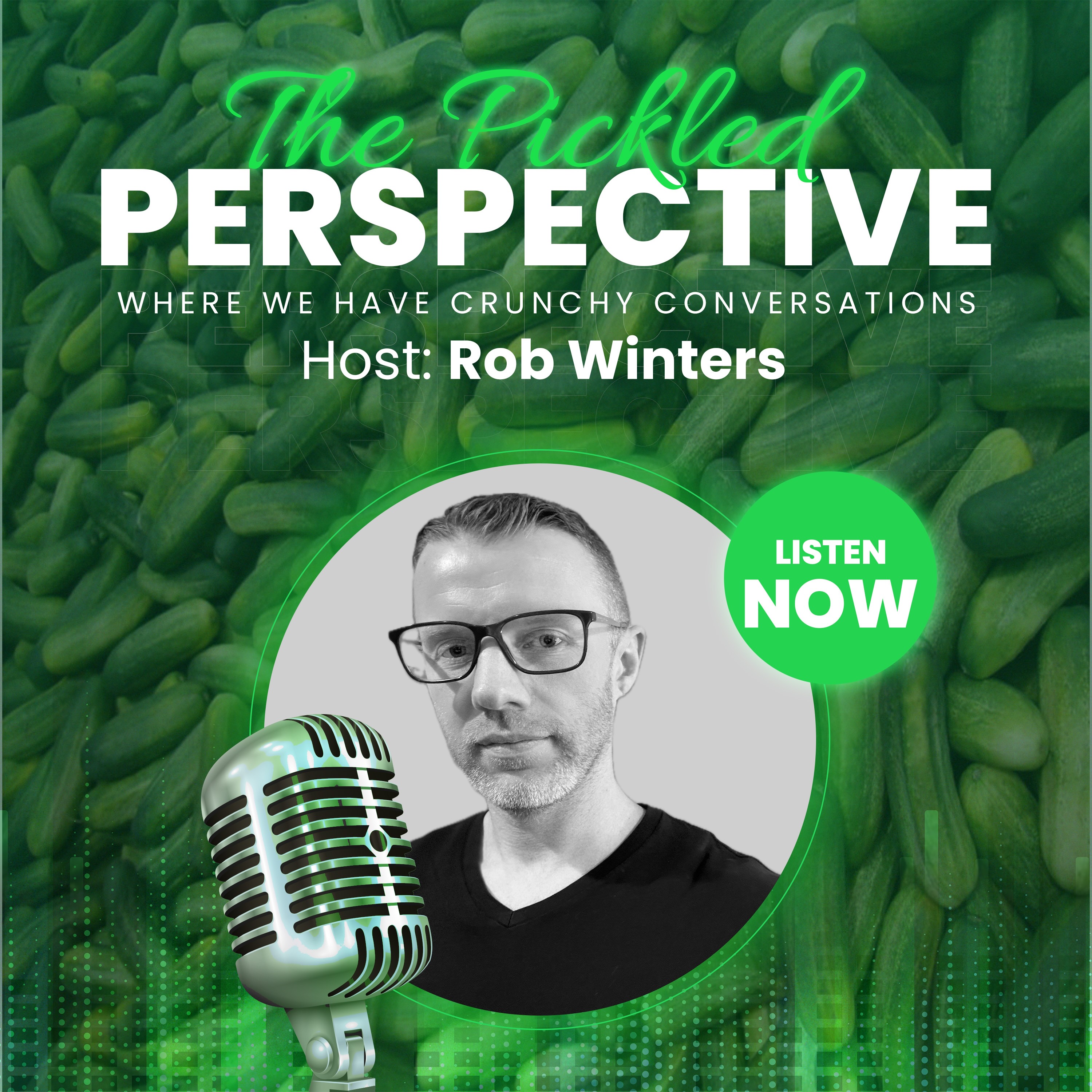

Growing Your Audience Like a Pro
The Pickled Perspective
| Rob Winters | Rating 0 (0) (0) |
| www.ThePodOps.com | Launched: Sep 19, 2024 |
| hi@thepodops.com | Season: 1 Episode: 4 |
Directories
Subscribe
Support My Podcast
My tips support PodProsper
The Pickled Perspective
Growing Your Audience Like a Pro
Sep 19, 2024,
Season
1,
Episode
4
Rob Winters
Episode Summary
**Podcast Episode Notes: Growing Your Audience Like a Pro**
**Introduction (0:00 - 2:00)**
- Host expresses gratitude for birthday wishes received.
- Brief personal anecdote about attending the new Beetlejuice movie; praises improvements in theater experience (reclining chairs, heated seats) despite cold AC.
**Main Topic: Growing Your Audience (2:00 - 40:00)**
**Initial Experience with Podcasting (2:00 - 5:00)**
- Host references the start of their first podcast, "Digitive Dirty Marketers."
- Discussed strategy of interviewing small business owners to gain exposure and build relationships with new audiences.
**Website Optimization (5:00 - 10:00)**
- Importance of customizing the podcast website provided by hosting platforms.
- Emphasizes the need to collect subscriber information (name, email, phone number) for better outreach.
- Discusses compliance with regulations (GDPR, spam) by utilizing opt-in mechanisms.
**Text vs. Email Communication (10:00 - 15:00)**
- Highlights findings from a report on messaging preferences: increasing preference for text messaging over email.
- Discusses higher deliverability, open, and click-through rates for text messages.
- Importance of personalized communication for listener engagement.
- Mentions PodOps Connect as a tool integrated for text communication with subscribers.
**Best Practices for Communication (15:00 - 20:00)**
- Discusses the significance of one-to-one communication rather than mass messaging.
- Suggests thanking subscribers personally to enhance engagement.
**Choosing Communication Tools (20:00 - 25:00)**
- Explains setup processes for third-party text communication tools and the advantages of using PodOps Connect.
- Encourages embedding subscription forms on personal websites (WordPress, etc.) to ensure seamless data management.
**Social Media Strategy (25:00 - 30:00)**
- Emphasizes the need for a focused social media strategy—suggests picking one or two platforms to concentrate efforts.
- Discusses audience demographics for social media platforms (e.g., TikTok for younger audiences, Facebook for older demographics).
- Encourages creating engaging content (sound bites, controversial topics) to increase shares and comments.
**SEO and Website Content (30:00 - 35:00)**
- Importance of optimizing podcast titles, show notes, and transcripts for search engines.
- Recommends including exclusive offers or bonus content in communications to incentivize subscriptions.
**Collaborations and Cross-Promotion (35:00 - 40:00)**
- Discusses the benefit of collaborating with other podcasters and influencers.
- Mentions Social Cat platform for connecting with micro-influencers.
- Highlights the effectiveness of host-read ads and cross-promotions.
**Branding Your Podcast (40:00 - 45:00)**
- Stresses the need for a strong podcast brand.
- Shares personal branding experience with PodOps, using playful themes (e.g., pickles) to enhance brand identity.
- Encourages creativity in branding and marketing efforts.
**Conclusion (45:00 - 47:00)**
- Wraps up with a reminder of the fun aspects of podcasting and branding.
- Encourages listeners to stay engaged and experiment with their own strategies for growing their audience.
**Key Takeaways:**
- Building an audience takes time and strategic effort.
- Utilize multiple communication channels effectively (text, email, social media).
- Personalization and engagement are critical for listener retention and growth.
- Collaborations and strong branding can significantly enhance visibility and appeal.
SHARE EPISODE
SUBSCRIBE
Episode Chapters
Growing Your Audience Like a Pro
The Pickled Perspective
Episode Summary:
**Podcast Episode Notes: Growing Your Audience Like a Pro**
**Introduction (0:00 - 2:00)**
- Host expresses gratitude for birthday wishes received.
- Brief personal anecdote about attending the new Beetlejuice movie; praises improvements in theater experience (reclining chairs, heated seats) despite cold AC.
**Main Topic: Growing Your Audience (2:00 - 40:00)**
**Initial Experience with Podcasting (2:00 - 5:00)**
- Host references the start of their first podcast, "Digitive Dirty Marketers."
- Discussed strategy of interviewing small business owners to gain exposure and build relationships with new audiences.
**Website Optimization (5:00 - 10:00)**
- Importance of customizing the podcast website provided by hosting platforms.
- Emphasizes the need to collect subscriber information (name, email, phone number) for better outreach.
- Discusses compliance with regulations (GDPR, spam) by utilizing opt-in mechanisms.
**Text vs. Email Communication (10:00 - 15:00)**
- Highlights findings from a report on messaging preferences: increasing preference for text messaging over email.
- Discusses higher deliverability, open, and click-through rates for text messages.
- Importance of personalized communication for listener engagement.
- Mentions PodOps Connect as a tool integrated for text communication with subscribers.
**Best Practices for Communication (15:00 - 20:00)**
- Discusses the significance of one-to-one communication rather than mass messaging.
- Suggests thanking subscribers personally to enhance engagement.
**Choosing Communication Tools (20:00 - 25:00)**
- Explains setup processes for third-party text communication tools and the advantages of using PodOps Connect.
- Encourages embedding subscription forms on personal websites (WordPress, etc.) to ensure seamless data management.
**Social Media Strategy (25:00 - 30:00)**
- Emphasizes the need for a focused social media strategy—suggests picking one or two platforms to concentrate efforts.
- Discusses audience demographics for social media platforms (e.g., TikTok for younger audiences, Facebook for older demographics).
- Encourages creating engaging content (sound bites, controversial topics) to increase shares and comments.
**SEO and Website Content (30:00 - 35:00)**
- Importance of optimizing podcast titles, show notes, and transcripts for search engines.
- Recommends including exclusive offers or bonus content in communications to incentivize subscriptions.
**Collaborations and Cross-Promotion (35:00 - 40:00)**
- Discusses the benefit of collaborating with other podcasters and influencers.
- Mentions Social Cat platform for connecting with micro-influencers.
- Highlights the effectiveness of host-read ads and cross-promotions.
**Branding Your Podcast (40:00 - 45:00)**
- Stresses the need for a strong podcast brand.
- Shares personal branding experience with PodOps, using playful themes (e.g., pickles) to enhance brand identity.
- Encourages creativity in branding and marketing efforts.
**Conclusion (45:00 - 47:00)**
- Wraps up with a reminder of the fun aspects of podcasting and branding.
- Encourages listeners to stay engaged and experiment with their own strategies for growing their audience.
**Key Takeaways:**
- Building an audience takes time and strategic effort.
- Utilize multiple communication channels effectively (text, email, social media).
- Personalization and engagement are critical for listener retention and growth.
- Collaborations and strong branding can significantly enhance visibility and appeal.
**Podcast Episode Notes: Growing Your Audience Like a Pro**
**Introduction (0:00 - 2:00)**
- Host expresses gratitude for birthday wishes received.
- Brief personal anecdote about attending the new Beetlejuice movie; praises improvements in theater experience (reclining chairs, heated seats) despite cold AC.
**Main Topic: Growing Your Audience (2:00 - 40:00)**
**Initial Experience with Podcasting (2:00 - 5:00)**
- Host references the start of their first podcast, "Digitive Dirty Marketers."
- Discussed strategy of interviewing small business owners to gain exposure and build relationships with new audiences.
**Website Optimization (5:00 - 10:00)**
- Importance of customizing the podcast website provided by hosting platforms.
- Emphasizes the need to collect subscriber information (name, email, phone number) for better outreach.
- Discusses compliance with regulations (GDPR, spam) by utilizing opt-in mechanisms.
**Text vs. Email Communication (10:00 - 15:00)**
- Highlights findings from a report on messaging preferences: increasing preference for text messaging over email.
- Discusses higher deliverability, open, and click-through rates for text messages.
- Importance of personalized communication for listener engagement.
- Mentions PodOps Connect as a tool integrated for text communication with subscribers.
**Best Practices for Communication (15:00 - 20:00)**
- Discusses the significance of one-to-one communication rather than mass messaging.
- Suggests thanking subscribers personally to enhance engagement.
**Choosing Communication Tools (20:00 - 25:00)**
- Explains setup processes for third-party text communication tools and the advantages of using PodOps Connect.
- Encourages embedding subscription forms on personal websites (WordPress, etc.) to ensure seamless data management.
**Social Media Strategy (25:00 - 30:00)**
- Emphasizes the need for a focused social media strategy—suggests picking one or two platforms to concentrate efforts.
- Discusses audience demographics for social media platforms (e.g., TikTok for younger audiences, Facebook for older demographics).
- Encourages creating engaging content (sound bites, controversial topics) to increase shares and comments.
**SEO and Website Content (30:00 - 35:00)**
- Importance of optimizing podcast titles, show notes, and transcripts for search engines.
- Recommends including exclusive offers or bonus content in communications to incentivize subscriptions.
**Collaborations and Cross-Promotion (35:00 - 40:00)**
- Discusses the benefit of collaborating with other podcasters and influencers.
- Mentions Social Cat platform for connecting with micro-influencers.
- Highlights the effectiveness of host-read ads and cross-promotions.
**Branding Your Podcast (40:00 - 45:00)**
- Stresses the need for a strong podcast brand.
- Shares personal branding experience with PodOps, using playful themes (e.g., pickles) to enhance brand identity.
- Encourages creativity in branding and marketing efforts.
**Conclusion (45:00 - 47:00)**
- Wraps up with a reminder of the fun aspects of podcasting and branding.
- Encourages listeners to stay engaged and experiment with their own strategies for growing their audience.
**Key Takeaways:**
- Building an audience takes time and strategic effort.
- Utilize multiple communication channels effectively (text, email, social media).
- Personalization and engagement are critical for listener retention and growth.
- Collaborations and strong branding can significantly enhance visibility and appeal.
Unlock the secrets to growing your audience like a pro with this insightful episode of the Pickled Perspective! Join us as we delve into effective strategies that can elevate your podcasting game, whether you're a seasoned host or just starting out. Learn the art of leveraging guest appearances to tap into new audiences, and discover how to optimize your podcast website for maximum engagement and subscriptions.
We also explore the rising trend of text messaging as a preferred communication channel, offering tips to create personalized connections with your listeners. Discover the importance of compliance in your outreach efforts and how to seamlessly integrate communication tools to enhance your listener experience.
With actionable insights on social media strategies, SEO optimization, and the significance of compelling content, this episode is packed with valuable information designed to help you cultivate a dedicated following. Plus, get a sneak peek into the latest developments in podcast marketing technology! Don’t miss out on these game-changing tips—tune in to transform your podcasting journey!
Good morning, and thank you for joining me for another episode of the Pickled Perspective. Today we are going to be talking about growing your audience like a pro. I'll also say a quick thank you to everybody who sent birthday wishes this week. It's very much appreciated. I am not much of a night person anymore, so we really just went out and saw a movie. We saw the new Beetlejuice Beetlejuice movie. If you enjoy Tim Burton or 80s nostalgia, definitely worth watching. It was pretty decent. It's also been about 10 years since I went to a movie theater, and they've really improved that experience. It was nice, the reclining chairs, the heated seats. Aside from the fact that they were blasting the AC in the theater and it was ice cold, it was a pretty good experience. Okay, so growing your audience. This is one of those things that's always a top question, and it's not easy. It is really difficult, so we'll step back a little bit to one of my first podcasts. When myself and my co-host, we started a podcast, the Digitive Dirty Marketers, and we would interview other small business owners. Really, our strategy there is in interviewing these third parties, we gave them a platform to talk about what they were doing with their business and putting that in front of a new audience. We also were getting ourselves exposure to their audiences. That's one of the great things about guests. If your guests have even a small following and your podcast is new, it does give you that ability to start to connect and build up a relationship with those individuals. Now, that's a long, tedious process. It does work to a degree. All of those people who listen to the episodes of their friends on your podcast are going to become listeners. It might be a small fraction, but that is a way to go. Really, as you start to invest your time and your energy into your strategies, you have to think about how you're collecting information or where you're directing people to listen to your podcast. By default, most of us are telling people to tune in wherever they listen to podcasts. That's a fine strategy because most people have Apple Podcasts. They have Spotify. These are apps we know we can direct them to where we're feeding our episodes out. A lot of times, we neglect our podcast website. I think pretty much every podcast hosting platform provides a podcast website. I won't say with certainty that they all do, but I think most of them do to some degree. But you should really be putting the effort in to customize your podcast website that you're provided, especially if it gives you tools where people can subscribe to your podcast there. I know the way that we configured it is we've given you a few options so that your listeners, your subscribers, they can subscribe with email and or phone number, and that goes into the system. On the pop-up where they subscribe, they can also write then in there, say, if they're interested in receiving email or text-based communications from you. We're doing the opt-in work up front for you so that you don't later have to worry about opting in, spam regulations, GDRP, any of that. We're taking care of that to make sure you're compliant at any point if you decide to start to do outreach, and we're giving you that mechanism to collect the information. Even if you decide to start to do outreach, and we're giving you that mechanism to collect the information. Even if you're using your own website, so let's say you're using WordPress, a very popular platform. I myself have a WordPress site. You should embed a form that lets people sign up for your newsletter, whether you're using a tool like MailChimp or Constant Contact. It doesn't matter where your emails are coming from. You need something so people can opt into that communication that lets them, one, give you a name and an email so that they can be on a list, but also you want to have that checkbox that says, I'm opting into communications, just so you don't ever get in trouble in case they reach out and try to say, no, I never signed up for this. That checkbox is very, very important. If you do happen to be a PodOps user, we have PodOps Connect, which has the email and the text component built into the platform. The way we built that is you don't have to use it, but your subscribers, they're loaded in to connect with those opt-ins pre-configured based on their preferences, whatever they select. If you ever want to use it in the future, I was reading, I read through, I think it was 52 pages of bandwidth.com, state of the message or state of messaging. If anybody would like that report, I am happy to email it to you. Feel free to reach out to me at rob at the podops.com. I will send it to you so you don't have to send them your information to get it. It's a very lengthy report on email and SMS, specifically around marketing and businesses. Really the gist of that report is people are beginning to prefer text messaging as their main method of communication over email. Not that they don't want emails, but because there is so much email and there's so much spam that text is a better way to create a communication channel with people and ensure they get the message. They're generally higher deliverability rates, higher open rates, higher click-through rates than we're seeing with email as email is beginning to decline because of all the competition and all of the spam. But where texting is making it go a step further, we're not just talking about sending out a massive text message to your list. So say you have 100 people or 1,000 people, you can send out that full text message. It's like, hey, a new episode dropped. What you've got to be able to do is if somebody replies, it's having that one-to-one communication. So it's texting them back if they ask a question or they inquire. It's the personalization that gives you that unique ability to talk to somebody that converts them. That's what turns somebody from a passive listener into a more connected, engaged listener who's going to subscribe, who's going to be more proactive, more engaged. And text is really giving you that mechanism. And with Connect, we have built that in. It's in the monetization tools as well. Anybody who subscribes to your list, they pop up. You can directly text them. You don't have to send out a mass message first. You can one-to-one go ahead and do that. It's also a great way to thank people if they're tipping you, if they're subscribing to your premium content. Again, it goes a lot further than a mass mailing saying, hey, thank you for tipping me. People don't want to be generalized. They want to be acknowledged. They want you to recognize them as an individual. And then it's ease of use for you as the podcaster. So you want to look at all of the tools that are out there. If you're going with a third-party tool, there are tons of them to do text-based communication. If you use a third-party tool, the average setup time for a phone number can be anywhere from five days to two weeks. It depends on that platform. They're going to verify you. They're going to verify that you're legitimate. Some of them might actually require that you are a business to get the phone number so that you can do texting. If you're doing it as an individual, they might require you to provide use cases. What are you doing? How did you acquire your list? So this is, again, kind of where the benefit of Connect comes from. I know it sounds like I'm selling you. I'm not trying to upsell you, just telling you what's in the system. We've done all that work. It was a huge pain in the butt. But all of that's been done, so it's already in the system. You're really just picking a phone number, and then you can go ahead and use it, so it's almost instantaneous. There's none of the BS going back and forth with the company to get a phone number verified. So things to think about. But as you are cultivating that list, kind of going back to the WordPress component, if you are using a third-party site, make sure you've got an email field with name, email, and potentially phone number on your site so people can subscribe. If you are using MailChimp or Constant Contact, they've got widgets that integrate into those platforms, so WordPress, Weebly, Wix, whatever you're using. Utilize their tool so that the data is flowing directly back into the platform. That also helps make your life easier so you're not exporting data from WordPress, importing it back into your mail platform, because what's going to happen? The data is going to get out of sync. You're going to get busy. You're going to forget. You're not going to update it, and suddenly you're going to have a bunch of contacts in WordPress that aren't in your email platform, and you're going to be sending to partial lists. So anywhere you can use a plug-in, if you are using one of those third-party website platforms, make sure you do. It will just make your life easier. And then as you look to where you're pushing your content out, I know I beat this drum all the time. Social media really is your best friend, and not that you need to be on every platform. There are so many platforms these days. I would say pick the two, maybe even the one that you can truly devote your time to. This is something even I struggle with with pod ops where we're on LinkedIn and X, Facebook, Instagram, TikTok. We did dump Pinterest, but we're on at least those five. And just creating all of the content to be on all of them, that's it. That's a full-time job in itself, and we have somebody who's working on that content. But even for my role in participating, that's a big lift where maybe it does make sense to potentially drop another platform where we can fine-tune it further. The announcement we'll be making on the 30th, that's going to add more platforms. So it's like we're going to go from five to eight, which is kind of crazy. So focus on if TikTok is going to be your specialty, especially if the audience you're trying to communicate with for your podcast is on that platform. And that's the other thing to think about. If you're focused on the 20-somethings, the 30-somethings, the 40-somethings, use the platform you know they're on. So don't just pick TikTok because it's hot at the moment. If you're focused on the 40-plus group, you might actually want to be focused on Facebook. Maybe those individuals are more engaged in groups there than they are on TikTok. If you're looking at the younger generation, you might want to be on TikTok versus Facebook. So again, do a little bit of homework to determine where you're going to be posting your content. But when you are posting it, that's when you're going to take anything from your audio or video podcast, you want to put out those juicy little sound bites, things that are going to draw somebody's attention. Get them to like, get them to share. If there are things that are potentially a little, you know, controversial or spicy, those are great things to share because they make people comment. Even if it's something where it's reactive, like, oh my God, I can't believe you said that, those can still be good reactions because they inspire a dialogue. I'm sure some people would disagree with me on that, but I think it's a good thing. And for your website, whether it is a podcast hosting provided website or a website that you build on your own, make sure you are taking care of the search engine optimization component. So your podcast titles, the information in your show notes, your description, what's in the transcript, make sure all of those things connect with your keywords so that if somebody is punching things into Google, your site is going to pop up for whatever you are trying to promote in your podcast or in your episode. And then if you are pushing out an email or a text, make sure, again, don't be misleading. You're not baiting and switching people, but put in little tidbits of the content or can you put in an exclusive offer? Is there some bonus content? If they subscribe to the podcast via your website, they get something extra. There's an extended version of the episode. They get whatever that may be. So if you can give them little nuggets that make them feel special or give them extra content, that can be a way to get people to subscribe as well. And then collaborations. This kind of goes back to what I talked about at the beginning where in my first podcast we were bringing on guests in order to get in front of their audience when we didn't really have one. You can do the same thing. You can also collaborate if there are other podcasters or influencers. I think I've mentioned before there's a platform called Social Cat. You can connect with micro-influencers. It is, I think, seven days free if you want to test out the platform, and then I think it goes up to $99 a month. If I remember correctly, the pricing might be a little different, but it should be pretty close to what I just mentioned. And they're not a sponsor, so that is not me giving them any shout-out other than we've used it before. It's a great platform to connect with new hungry influencers who are trying to establish themselves so they are much more flexible and willing to be on a podcast or promote your product or your podcast. So that's something you can try. It also doesn't have a long-term commitment, so you're not locked into a contract. And then with podcasters, if you are doing cross-promotion or cross-collaboration, even if it's not a true guest spot, maybe it is that host-read ad at the end of an episode where they plug your podcast and you plug theirs. That's still really powerful. Your audience is going to take more value from you saying that you think this is a great podcast and vice versa than if it's some random person reading an ad at the end of your podcast. So always keep in mind that you have a lot of value in your voice and what you're sharing. And then branding. You have to have a brand. So what is the brand of your podcast that you're trying to sell? If you think about PodOps and the brand that we put forward, everything is really centered around pickles at this point, which is it stems from my dog, Teddy Pickles, who is over there asleep. She did not appreciate me waking up today at 4. She will be up in about 4 more hours because it will be noon Eastern time. But everything sort of stemmed from her once we did some rebranding about a year ago where now our users or our listeners, we refer to as the pickle posse. There's pickle branding in everything. There's a pickle light behind you. There are pickle stickers on the wall. So green has been incorporated into our colors. So you think about your branding and you can also have fun with it. I think branding and marketing can be one of the most fun components of an entire company, of a podcast. Even the name of this podcast was inspired by Teddy Pickles. And the whole point of it was just to do something fun and different. And we're also doing it in a different medium. So we're doing it live via YouTube versus recording and editing. So also trying new things, which introduces you to new audiences and potentially brings you new listeners. So again, it's trying something new. I do want to do a more in-depth episode on branding and we'll dig into why we went the Teddy Pickles route. We won't get into that today, but just kind of touching on that's how we pivoted the pod ops branding where originally we kind of had that more traditional podcast hosting platform marketing, which I feel like we seemed a lot like all the other platforms. And this is a much more differentiated brand and feel. And I think it also makes us more human and fun and less corporate, which is what we want. And also with the podcast, it's intended to be less corporate. I don't want to feel corporate. So again, things to think about. Building your audience, it is very difficult. It takes a lot of time. You will get lots of scammers in your DMs, in your mailbox that promise you that for $100 or $50 they can get you a thousand downloads and X listeners and subscribers. Don't waste your money. Those are scams. They generally are just bots that are being added to whatever platform you're utilizing to get your money and boost the numbers quickly so that person can make a quick buck. You need to invest the time to, one, put out good quality content, as I'm sure everybody listening knows, but then also take the time to cultivate the audience. So once you do get a subscriber, communicate with them. So whether that is via email or text, and I'm a strong advocate of that one-to-one text messaging because you can have that very personal connection with them. That can really build a strong connection. It's also a great way, especially when your audience is really, really small in the beginning, to build those bonds and build advocates for your podcast and your brand and bring in new individuals that you might not have had the ability to connect with without those original audience members. So those are my thoughts on building your audience. If you have any tips that you would like to share, please add them in the comments. There's no one right way to build an audience. I think there are so many possibilities and options out there, but I'd be very interested in anything that has worked for you. Please feel free to share. Next week, we'll be doing some testing, recording via the iPad because I'm getting ready to do some traveling, and we'll see how that goes. So plan to tune in next Tuesday. Until then, happy creating, and thank you for tuning in. ♪♪♪ Good morning, and thank you for joining me for another episode of the Pickled Perspective. Today we are going to be talking about growing your audience like a pro. I'll also say a quick thank you to everybody who sent birthday wishes this week. It's very much appreciated. I am not much of a night person anymore, so we really just went out and saw a movie. We saw the new Beetlejuice Beetlejuice movie. If you enjoy Tim Burton or 80s nostalgia, definitely worth watching. It was pretty decent. It's also been about 10 years since I went to a movie theater, and they've really improved that experience. It was nice, the reclining chairs, the heated seats. Aside from the fact that they were blasting the AC in the theater and it was ice cold, it was a pretty good experience. Okay, so growing your audience. This is one of those things that's always a top question, and it's not easy. It is really difficult, so we'll step back a little bit to one of my first podcasts. When myself and my co-host, we started a podcast, the Digitive Dirty Marketers, and we would interview other small business owners. Really, our strategy there is in interviewing these third parties, we gave them a platform to talk about what they were doing with their business and putting that in front of a new audience. We also were getting ourselves exposure to their audiences. That's one of the great things about guests. If your guests have even a small following and your podcast is new, it does give you that ability to start to connect and build up a relationship with those individuals. Now, that's a long, tedious process. It does work to a degree. All of those people who listen to the episodes of their friends on your podcast are going to become listeners. It might be a small fraction, but that is a way to go. Really, as you start to invest your time and your energy into your strategies, you have to think about how you're collecting information or where you're directing people to listen to your podcast. By default, most of us are telling people to tune in wherever they listen to podcasts. That's a fine strategy because most people have Apple Podcasts. They have Spotify. These are apps we know we can direct them to where we're feeding our episodes out. A lot of times, we neglect our podcast website. I think pretty much every podcast hosting platform provides a podcast website. I won't say with certainty that they all do, but I think most of them do to some degree. But you should really be putting the effort in to customize your podcast website that you're provided, especially if it gives you tools where people can subscribe to your podcast there. I know the way that we configured it is we've given you a few options so that your listeners, your subscribers, they can subscribe with email and or phone number, and that goes into the system. On the pop-up where they subscribe, they can also write then in there, say, if they're interested in receiving email or text-based communications from you. We're doing the opt-in work up front for you so that you don't later have to worry about opting in, spam regulations, GDRP, any of that. We're taking care of that to make sure you're compliant at any point if you decide to start to do outreach, and we're giving you that mechanism to collect the information. Even if you decide to start to do outreach, and we're giving you that mechanism to collect the information. Even if you're using your own website, so let's say you're using WordPress, a very popular platform. I myself have a WordPress site. You should embed a form that lets people sign up for your newsletter, whether you're using a tool like MailChimp or Constant Contact. It doesn't matter where your emails are coming from. You need something so people can opt into that communication that lets them, one, give you a name and an email so that they can be on a list, but also you want to have that checkbox that says I'm opting into communications just so you don't ever get in trouble. in case they reach out and try to say, no, I never signed up for this, that checkbox is very, very important. Then if you do happen to be a PodOps user, we have PodOps Connect, which has the e-mail and the text component built into the platform. The way we built that is you don't have to use it, but your subscribers, they're loaded in to connect with those opt-ins pre-configured based on their preferences, whatever they select. If you ever want to use it in the future, I read through, I think it was 52 pages of bandwidth.com, state of the message or state of messaging. If anybody would like that report, I am happy to e-mail it to you. Feel free to reach out to me at rob at the podops.com. I will send it to you so you don't have to send them your information to get it. It's a very lengthy report on e-mail and SMS specifically around marketing and businesses. Really the gist of that report is people are beginning to prefer text messaging as their main method of communication over e-mail. Not that they don't want e-mails, but because there is so much e-mail and there's so much spam, that text is a better way to create a communication channel with people and ensure they get the message. They're generally higher deliverability rates, higher open rates, higher click-through rates, than we're seeing with e-mail as e-mail is beginning to decline because of all the competition and all of the spam. But where texting is making it go a step further, we're not just talking about sending out a massive text message to your list. Say you have a 100 people or a 1,000 people, you can send out that full text message. It's like, hey, a new episode dropped. What you've got to be able to do is if somebody replies, it's having that one-to-one communication. It's texting them back if they ask a question or they inquire, it's the personalization that gives you that unique ability to talk to somebody that converts them. That's what turns somebody from a passive listener into a more connected, engaged listener, who's going to subscribe, who's going to be more proactive, more engaged. Text is really giving you that mechanism. With Connect, we have built that in. It's in the monetization tools as well. Anybody who subscribes to your list, they pop up. You can directly text them. You don't have to send out a mass message first. You can one-to-one go ahead and do that. It's also a great way to thank people if they're tipping you, if they're subscribing to your premium content. Again, it goes a lot further than a mass mailing saying, hey, thank you for tipping me. People don't want to be generalized. They want to be acknowledged. They want you to recognize them as an individual. And then it's ease of use for you as the podcaster. So you want to look at all of the tools that are out there. If you're going with a third-party tool, there are tons of them to do text-based communication. If you use a third-party tool, the average setup time for a phone number can be anywhere from five days to two weeks. It depends on that platform. They're going to verify you. They're going to verify that you're legitimate. Some of them might actually require that you are a business to get the phone number so that you can do texting. If you're doing it as an individual, they might require you to provide use cases. What are you doing? How did you acquire your list? So this is, again, kind of where the benefit of Connect comes from. I know it sounds like I'm selling you. I'm not trying to upsell you, just telling you what's in the system. We've done all that work. It was a huge pain in the butt, but all of that's been done. So it's already in the system. You're really just picking a phone number and then you can go ahead and use it. So it's almost instantaneous. There's none of the BS going back and forth with the company to get a phone number verified. So things to think about. But as you are cultivating that list, kind of going back to the WordPress component, if you are using a third-party site, make sure you've got an email field with name, email, and potentially phone number on your site so people can subscribe. If you are using MailChimp or Constant Contact, they've got widgets that integrate into those platforms. So WordPress, Weebly, Wix, whatever you're using, utilize their tool so that the data is flowing directly back into the platform. That also helps make your life easier so you're not exporting data from WordPress, importing it back into your mail platform because what's going to happen, the data is going to get out of sync. You're going to get busy. You're going to forget. You're not going to update it. And suddenly you're going to have a bunch of contacts in WordPress that aren't in your email platform and you're going to be sending to partial lists. So anywhere you can use a plugin, or using one of those third party website platforms, make sure you do, it'll just make your life easier. And then as you look to where you're pushing your content out, I know I beat this drum all the time, social media really is your best friend. And not that you need to be on every platform, there are so many platforms these days. I would say pick the two, maybe even the one that you can truly devote your time to. This is something even I struggle with, with pod ops where we're on LinkedIn and X, Facebook, Instagram, TikTok. We did dump Pinterest, but we're on at least those five and just creating all of the content to be on all of them, that's it, that's a full-time job in itself. And we have somebody who's working on that content, but even for my role in participating, that's a big lift where maybe it does make sense to potentially drop another platform where we can fine tune it further. The announcement we'll be making on the 30th, that's gonna add more platforms. So it's like, we're gonna go from five to eight, which is kind of crazy. So focus on if it's TikTok is gonna be your specialty, especially if the audience you're trying to communicate with for your podcast is on that platform. And that's the other thing to think about. If you're focused on the 20 somethings, the 30 somethings, the 40 somethings, use the platform you know they're on. So don't just pick TikTok because it's hot at the moment. If you're focused on the 40 plus group, you might actually wanna be focused on Facebook. Maybe those individuals are more engaged in groups there than they are on TikTok. If you're looking at the younger generation, you might wanna be on TikTok versus Facebook. So again, do a little bit of homework to determine where you're going to be posting your content. But when you are posting it, that's when you're gonna take anything from your audio or video podcast. You wanna put out those juicy little sound bites, things that are going to draw somebody's attention, get them to like, get them to share. If there are things that are potentially a little, you know, controversial or spicy, those are great things to share because they make people comment. Even if it's something where it's reactive, like, oh my God, I can't believe you said that, those can still be good reactions because they inspire a dialogue. I'm sure some people would disagree with me on that, but I think it's a good thing. And for your website, whether it is a podcast hosting provided website or a website that you build on your own, make sure you are taking care of the search engine optimization component. So your podcast titles, the information in your show notes, your description, what's in the transcript, make sure all of those things connect with your keywords so that if somebody is punching things into Google, your site is gonna pop up for whatever you are trying to promote in your podcast or in your episode. And then if you are pushing out an email or a text, make sure, again, don't be misleading. You're not baiting and switching people, but put in little tidbits of the content, or can you put in an exclusive offer? Is there some bonus content? If they subscribe to the podcast via your website, they get something extra. There's an extended version of the episode. They get whatever that may be. So if you can give them little nuggets that make them feel special or give them extra content, that can be a way to get people to subscribe as well. And then collaborations. This kind of goes back to what I talked about at the beginning, where in my first podcast, we were bringing on guests in order to get in front of their audience when we didn't really have one. You can do the same thing. So collaborate. If there are other podcasters or influencers, I think I've mentioned before, there's a platform called Social Cat. You can connect with micro-influencers. It is, I think, seven days free if you wanna test out the platform. And then I think it goes up to $99 a month, if I remember correctly. The pricing might be a little different, but it should be pretty close to what I just mentioned. And they're not a sponsor, so that is not me giving them any shout-out other than we've used it before. It's a great platform to connect with new hungry influencers who are trying to establish themselves so they are much more flexible and willing to be on a podcast or promote your product or your podcast. So that's something you can try. It also doesn't have a long-term commitment, so you're not locked into a contract. And then with podcasters, if you are doing cross-promotion or cross-collaboration, even if it's not a... through GuestSpot, maybe it is that host-read ad at the end of an episode where they plug your podcast and you plug theirs. That's still really powerful. Your audience is going to take more value from you saying that you think this is a great podcast and vice versa than if it's some random person reading an ad at the end of your podcast. So always keep in mind that you have a lot of value in your voice and what you're sharing. And then branding, you know, you have to have a brand. So what is the brand of your podcast that you're trying to sell? You know, if you think about PodOps and the brand that we put forward, everything is really centered around Pickles at this point, which is, it stems from my dog, Teddy Pickles, who is over there asleep. She did not appreciate me waking up today at four. She will be up in about four more hours because it'll be noon Eastern time. But, you know, everything sort of stemmed from her once we did some rebranding about a year ago where now our users or our listeners, we refer to as the Pickle Posse. There's Pickle branding and everything. There's a Pickle light behind you. There are Pickle stickers on the wall. So green has been incorporated into our colors. So you think about your branding and you can also have fun with it. I think branding and marketing can be one of the most important things to do. Marketing can be one of the most fun components of an entire company, of a podcast. Even the name of this podcast was inspired by Teddy Pickles. And the whole point of it was just to do something fun and different, and we're also doing it in a different medium. So we're doing it live via YouTube versus recording and editing. So also trying new things, which introduces you to new audiences and potentially brings you new listeners. So again, it's trying something new. I do wanna do a more in-depth episode on branding and we'll dig into why we went the Teddy Pickles route. We won't get into that today, but just kind of touching on, that's how we pivoted the PodOps branding where originally we kind of had that more traditional podcast hosting platform marketing, which I feel like we seemed a lot like all the other platforms. And this is a much more differentiated brand and feel. And I think it also makes us more human and fun and less corporate, which is what we want. And also with the podcast, it's intended to be less corporate. I don't wanna feel corporate. So again, things to think about. Building your audience, it is very difficult. It takes a lot of time. You will get lots of scammers in your DMs, in your mailbox that promise you that for $100 or $50, they can get you a thousand downloads and X listeners and subscribers. Don't waste your money. Those are scams. They generally are just bots that are being added to whatever platform you're utilizing to get your money and boost the numbers quickly so that person can make a quick buck. You need to invest the time to one, put out good quality content, as I'm sure everybody listening knows, but then also take the time to cultivate the audience. So once you do get a subscriber, communicate with them. So whether that is via email or text, and I'm a strong advocate of that one-to-one text messaging because you can have that very personal connection with them that can really build a strong connection. It's also a great way, especially when your audience is really, really small in the beginning to build those bonds and build advocates for your podcast and your brand and bring in new individuals that you might not have had the ability to connect with without those original audience members. So those are my thoughts on building your audience. If you have any tips that you would like to share, please add them in the comments. There's no one right way to build an audience. I think there are so many possibilities and options out there, but I'd be very interested in anything that has worked for you. Please feel free to share. And next week we'll be doing some testing, recording via the iPad because I'm getting ready to do some traveling and we'll see how that goes. So I plan to tune in next Tuesday. Until then, happy creating and thank you for tuning in. Thank you.
Give Ratings
0
Out of 5
0 Ratings
(0)
(0)
(0)
(0)
(0)
Comments:
Share On
Follow Us
All content ©
The Pickled Perspective.
Interested in podcasting? Learn how you can
start a podcast
with PodOps. Podcast hosting by
PodOps Hosting.
Stay updated
All Content Copyright ©
| All rights reserved
| Privacy Policy
| Terms of Use
| Cookie Policy
| Acceptable Use Policy